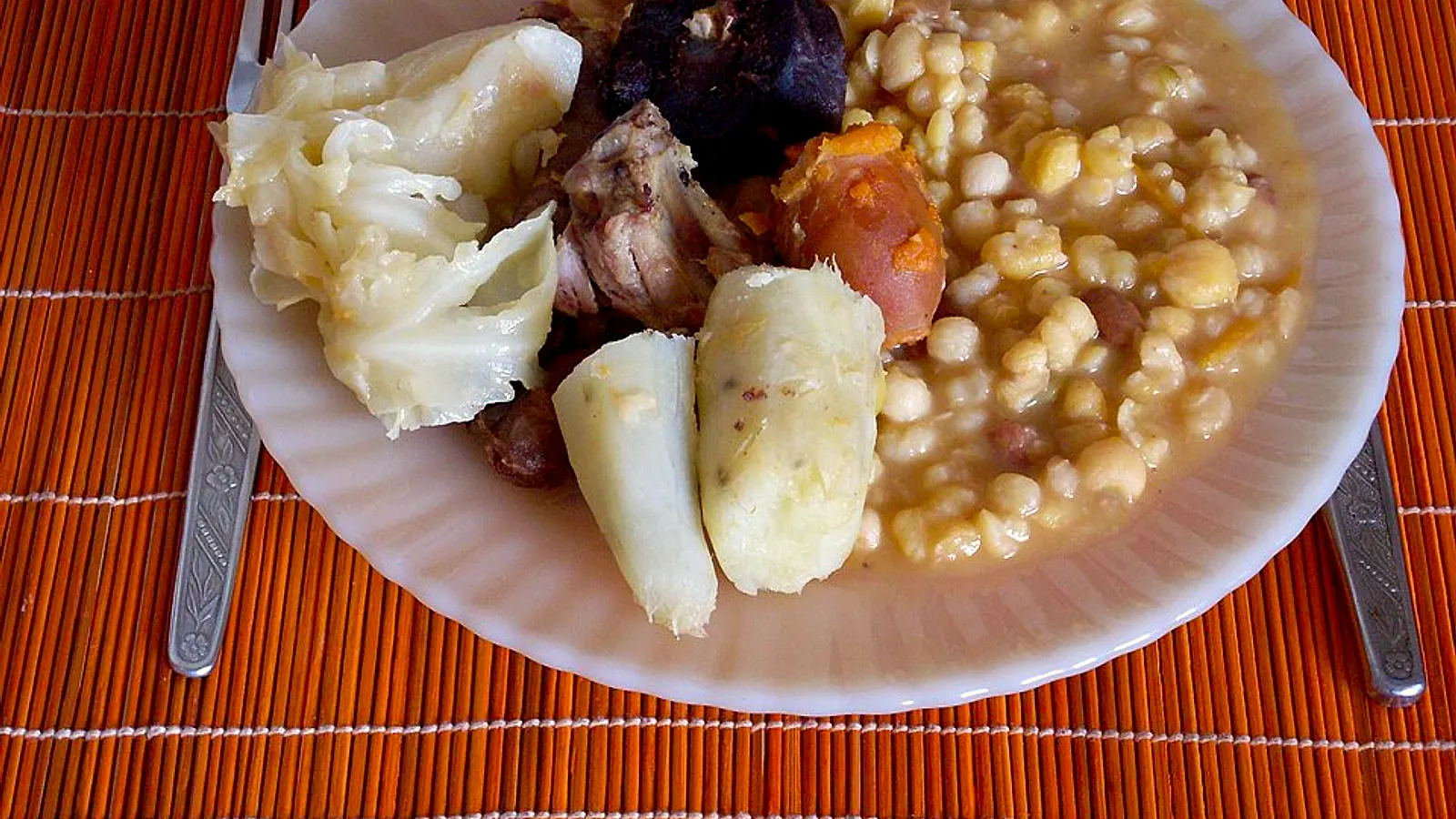
A plate of cachupa rica seen from above: maize, beans, meat, chouriço, cassava and kale, on an orange mat.

at the table and in the street

Food and traditions

It all starts with maize

From the maize that survived the droughts to the festivals that bring together those who stayed and those who left.

Photo: Xandu

At the table

Choose a dish to find out where it is from and what goes into it.

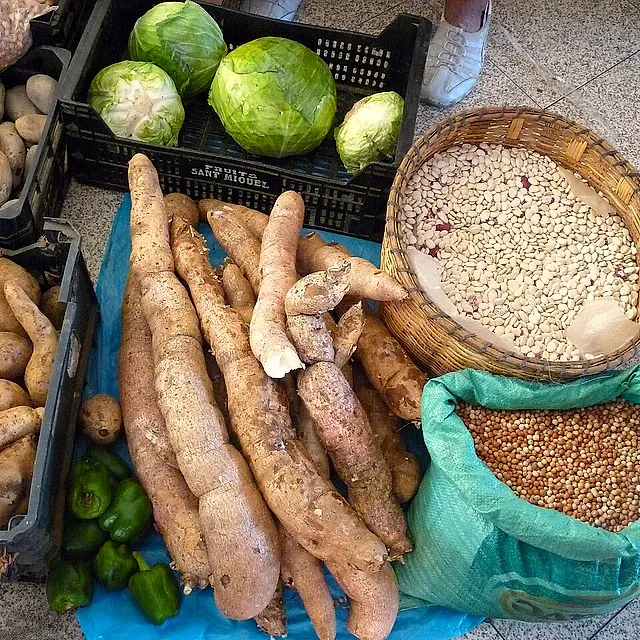
Cassava, kale, beans and maize for sale at a market.

Maize, beans, cassava and kale: what the land gave, pounded and slowly cooked.

Photo: Ji-Elle, CC BY-SA 3.0.

From maize

Cachupa

Where from: Considered the national dish. Every family has its own recipe.

Maize and beans, with meat or fish, slowly cooked for hours. Cachupa rica, rich cachupa, has more ingredients than cachupa pobre, poor cachupa, and many cooks keep their recipe a secret. What is left over is fried up the next day, and often eaten for breakfast, with an egg and sausage. In Praia, on Saturdays, some people cook it in the street, over a wood fire, in big pots. In 2017 a six-tonne cachupa was made there, and it went into the Guinness book. No one knows for sure how it began.

See a recipe

Time: About an hour and a half, plus a night of soaking

Ingredients

  • 1 kg of maize for cachupa
  • 500 g of butter beans
  • 500 g of red kidney beans
  • 150 g of pork belly
  • 1 pig's trotter
  • 500 g of pork ribs
  • 500 g of chicken
  • 2 local linguiça sausages
  • 2 chouriço sausages
  • 500 g of cassava
  • 500 g of yam
  • 500 g of green banana
  • 500 g of sweet potato
  • A quarter of a cabbage
  • 4 kale leaves
  • 2 medium onions
  • 1 pepper
  • 2 cloves of garlic
  • 4 tablespoons of wine
  • Chilli, bay leaf, olive oil and salt, to taste

Method

  1. The day before, soak the maize and the beans in cold water.
  2. The next day, drain them, put them in a large pot, cover them with water and bring to the boil.
  3. When the maize and beans are almost cooked, add the linguiça and chouriço.
  4. In a frying pan, brown the onion, garlic and pepper in olive oil.
  5. Add the meats and pork belly, cut up and seasoned with salt, chilli and wine, and let them fry gently.
  6. Tip this mixture into the pot with the maize.
  7. Cut up the cassava, yam, banana, sweet potato, cabbage and kale, and add them to the pot with the bay leaf.
  8. Let it simmer over a low heat until the broth thickens.

This is a cachupa rica, with meat. The same source also gives a cachupa pobre, with fewer ingredients and with fish instead of meat. Any leftovers can be fried up the next day.

To cook with fire, knives or hot oil, ask an adult for help.

It is one version among many: each family makes it its own way. Recipe adapted from Cachupa: receita de Cabo Verde para a sua mesa.

Fried cachupa with egg and sausage.

Photo: Autor do projeto.

Maize

Maize is the historical basis of Cape Verdean food and a symbol of resistance to the droughts and famines that marked the islands. It is used to make cachupa, xerém, cuscuz, papas and maize bread. The writer Germano Almeida tells how maize came from Brazil, in exchange for the coconut palm, which Cabo Verde sent there.

Test what you've learnt18 questions about food and traditions

References

  1. À descoberta da cachupa
  2. Cachupa (Wikipédia em inglês)
  3. Cachupa à solta pelas ruas de Cabo Verde, todos os fins-de-semana
  4. Cachupa: receita de Cabo Verde para a sua mesa
  5. Cachupa: Tradição cabo-verdiana nas ruas da Praia
  6. Festas de bandeira na Ilha do Fogo