a journey through time

History

The moments that made Cabo Verde, on a timeline to scale.

150016001700180019002000

Close-up: from 1930 to 2025

19401960198020002020
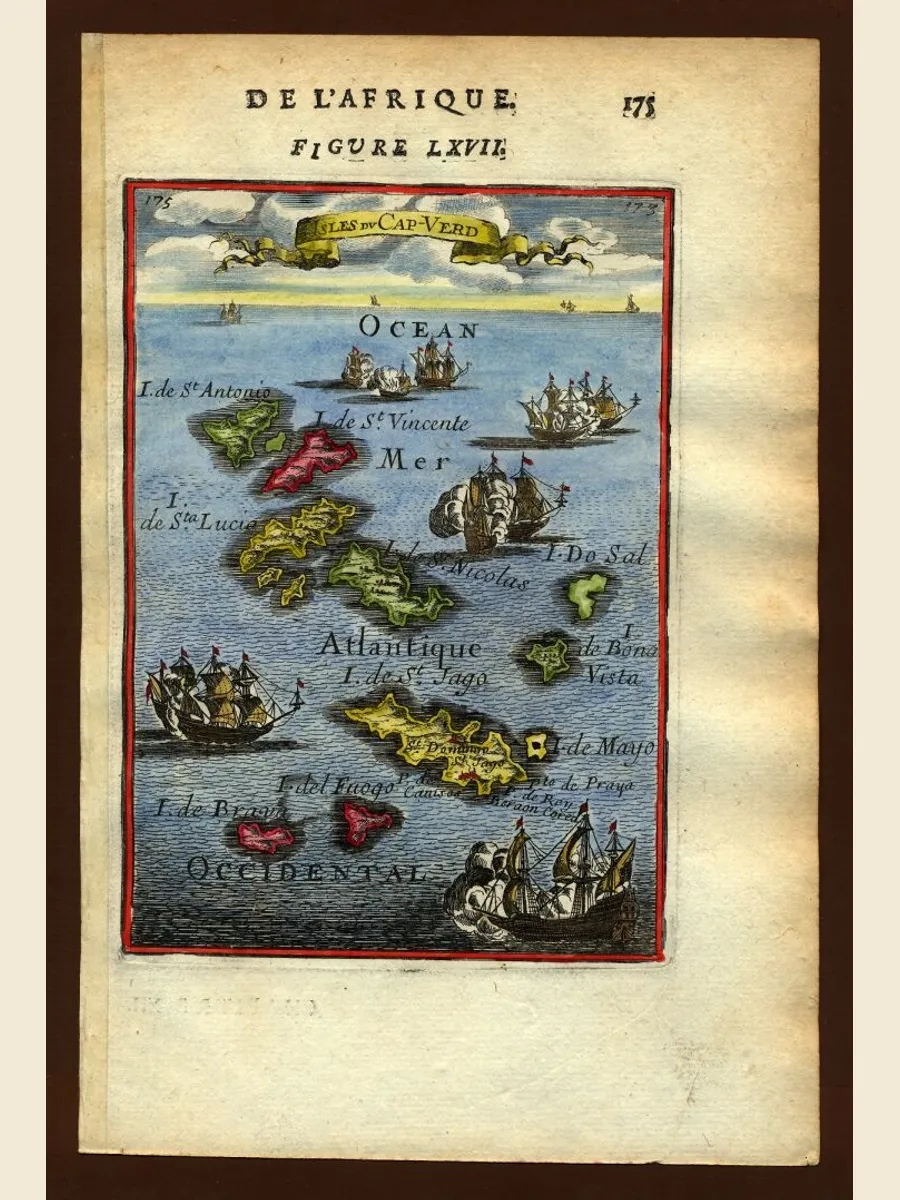
An old, coloured map of the islands of Cabo Verde, with ships drawn on the sea.Photo: Alain Manesson Mallet

Settlement and slavery

1460

The expeditions from Portugal arrive

Expeditions in the service of Portugal reach the islands. No one was living on the islands. In 2026, a researcher presented traces that may point to an earlier human presence, but they are still unproven.

Read it all
More than 500 years as a colony and about 50 as an independent country.

The chapters

Chapter 1 · 1460 – 1876

Settlement and slavery

Photo: Alain Manesson Mallet

  1. 1460The expeditions from Portugal arriveExpeditions in the service of Portugal reach the islands.
    An old, coloured map of the islands of Cabo Verde, with ships drawn on the sea.
    The islands on a French map from 1683. Photo: Alain Manesson Mallet.

    Expeditions in the service of Portugal reach the islands. No one was living on the islands. In 2026, a researcher presented traces that may point to an earlier human presence, but they are still unproven.

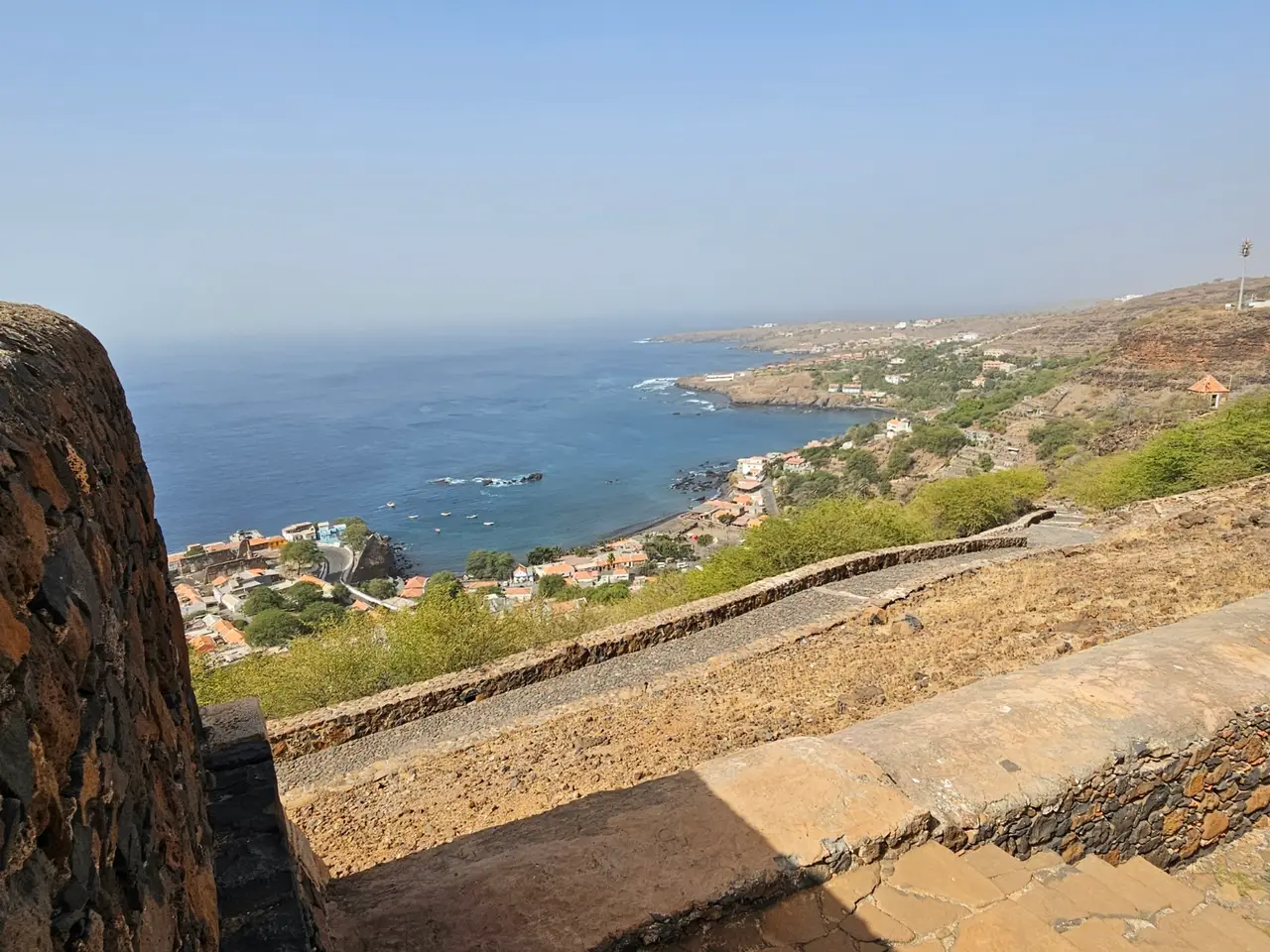
  2. 1462Ribeira Grande is bornRibeira Grande, now Cidade Velha, is founded on the island of Santiago.
    A village of orange roofs by a blue bay, seen from the top of a stone wall.
    Cidade Velha, formerly Ribeira Grande, seen from the Fortaleza Real de São Filipe. Photo: GualdimG, CC BY-SA 4.0.

    Ribeira Grande, now Cidade Velha, is founded on the island of Santiago.

  3. 16th centuryThe trade in enslaved peopleThe archipelago grows rich from the transatlantic trade in enslaved people.
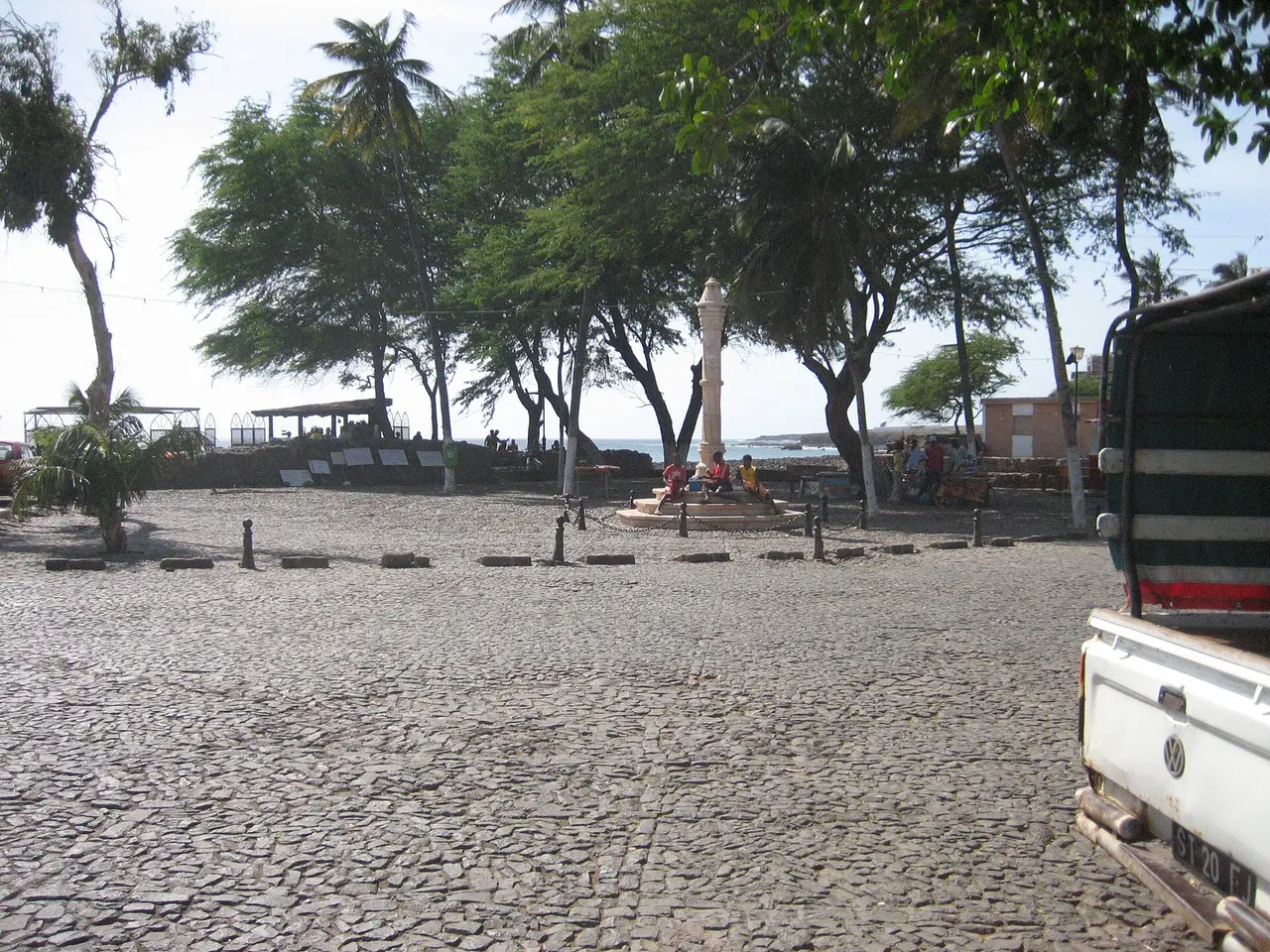
    A pale stone column in the middle of a cobbled square, in the shade of trees, with the sea behind.
    The pillory in the square of Cidade Velha, on Santiago. It was used to punish people in public. Photo: Ingo Wölbern.

    The archipelago grows rich from the transatlantic trade in enslaved people. The price of that wealth was the freedom and the lives of many African people.

  4. 1876The end of slaverySlavery is abolished.

    Slavery is abolished.

Chapter 2 · 1860 – 1960

Resisting and leaving

Photo: Tichnor Brothers

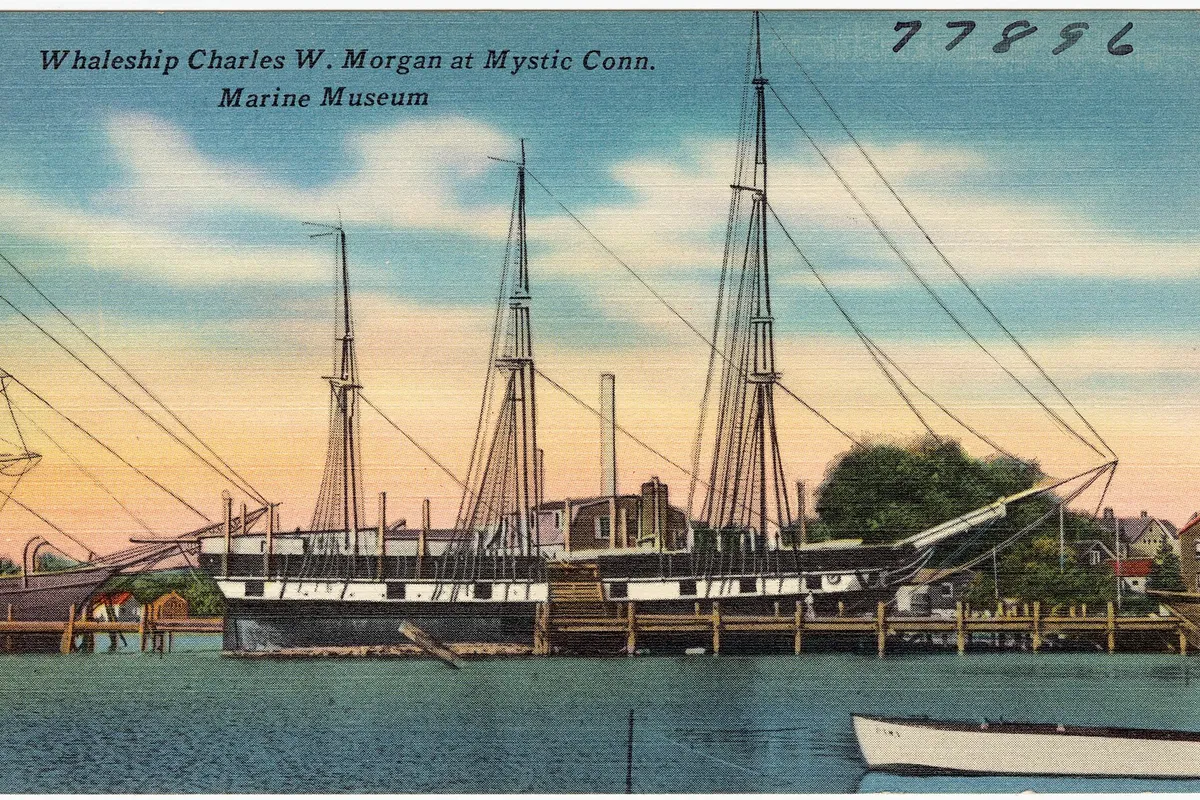
  1. Around 1860The whalers set sailAmerican whaling ships begin recruiting crews on Brava.
    A three-masted whaling ship moored at a quay, on an old coloured postcard.
    The whaler Charles W. Morgan, from New Bedford, on a postcard from around 1930 to 1945. Photo: Tichnor Brothers.

    American whaling ships begin recruiting crews on Brava. This is the start of the Cape Verdean community in the United States.

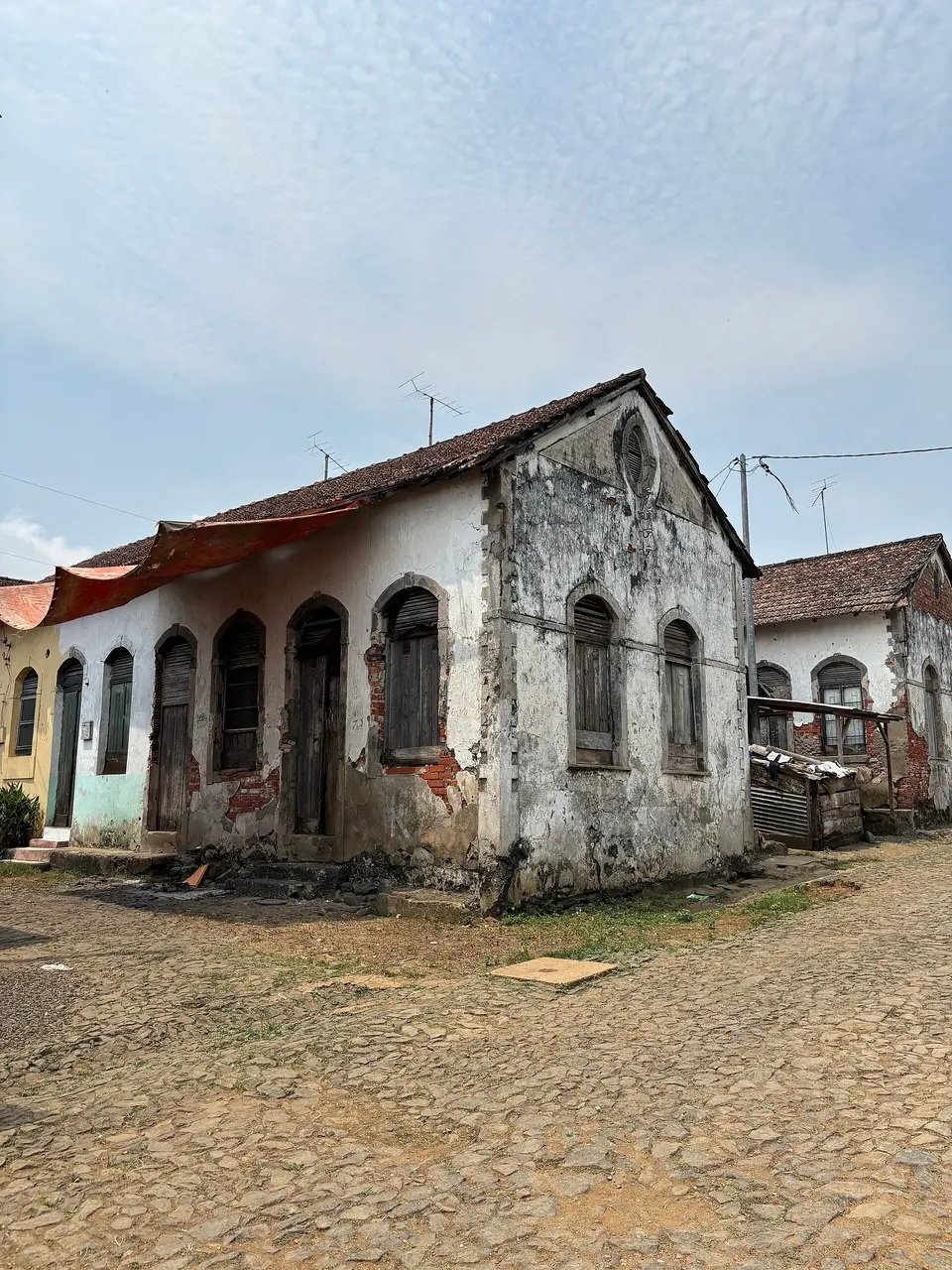
  2. 1900–1970The contract workers of São ToméAbout 80,000 people leave for the plantations of São Tomé and Príncipe as contract workers, in terrible conditions.
    An old, run-down house, with stained white walls and wooden windows, on a stone street.
    Houses where the contract workers lived on the Água-Izé plantation, in São Tomé, photographed in 2025. Photo: 7deAbril, CC BY-SA 4.0.

    About 80,000 people leave for the plantations of São Tomé and Príncipe as contract workers, in terrible conditions. Even today, many people compare this migration to slavery.

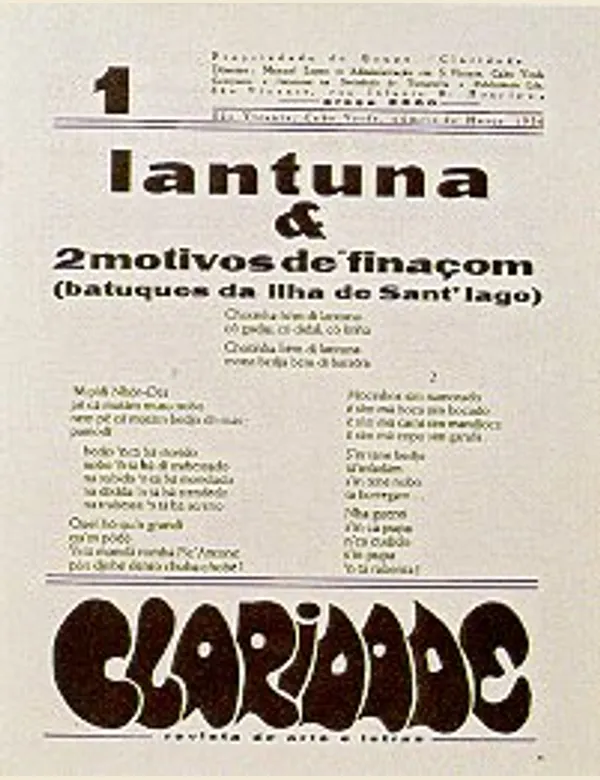
  3. 1936The magazine Claridade is bornIn Mindelo, Manuel Lopes, Baltasar Lopes da Silva and Jorge Barbosa launch the magazine Claridade.
    A magazine cover with the title Claridade in large letters and printed verses.
    The cover of the first issue of Claridade, Mindelo, 1936. Photo: Revista Claridade.

    In Mindelo, Manuel Lopes, Baltasar Lopes da Silva and Jorge Barbosa launch the magazine Claridade. It published in Portuguese and Kriolu, and helped assert a cultural identity of Cabo Verde's own. Nine issues came out until 1960.

  4. 1941–1948The great faminesDevastating droughts and neglect by the colonial power caused terrible famines.

    Devastating droughts and neglect by the colonial power caused terrible famines. In the 1940s, two famines in a row killed about a quarter of the population, tens of thousands of people.

  5. The 1960sTowards EuropeDepartures grow: to Portugal, to the Netherlands as seafarers and to Italy as domestic workers.

    Departures grow: to Portugal, to the Netherlands as seafarers and to Italy as domestic workers.

Chapter 3 · 1956 – 1981

Struggle and independence

Photo: Waldir (desenho)

  1. 1956PAIGC is bornAmílcar and Luís Cabral found the African Party for the Independence of Guinea and Cabo Verde.

    Amílcar and Luís Cabral found the African Party for the Independence of Guinea and Cabo Verde.

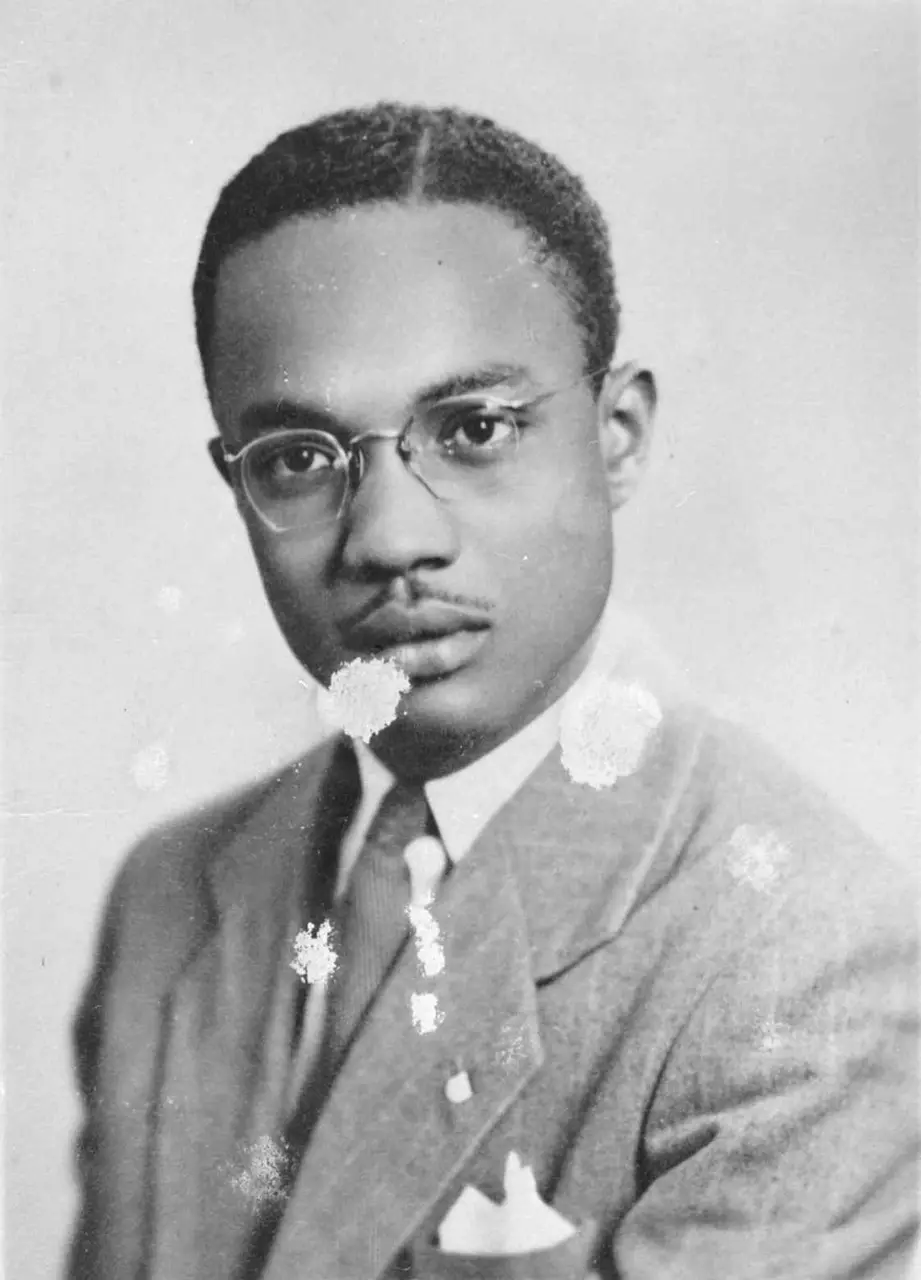
  2. 20 January 1973The death of Amílcar CabralAmílcar Cabral is shot dead in Conakry.
    Black-and-white portrait of a young man with glasses, a suit and a tie.
    Amílcar Cabral as a young man. Photo: Autor desconhecido.

    Amílcar Cabral is shot dead in Conakry. The shots were fired by Inocêncio Kani. Who ordered the killing is still unclear.

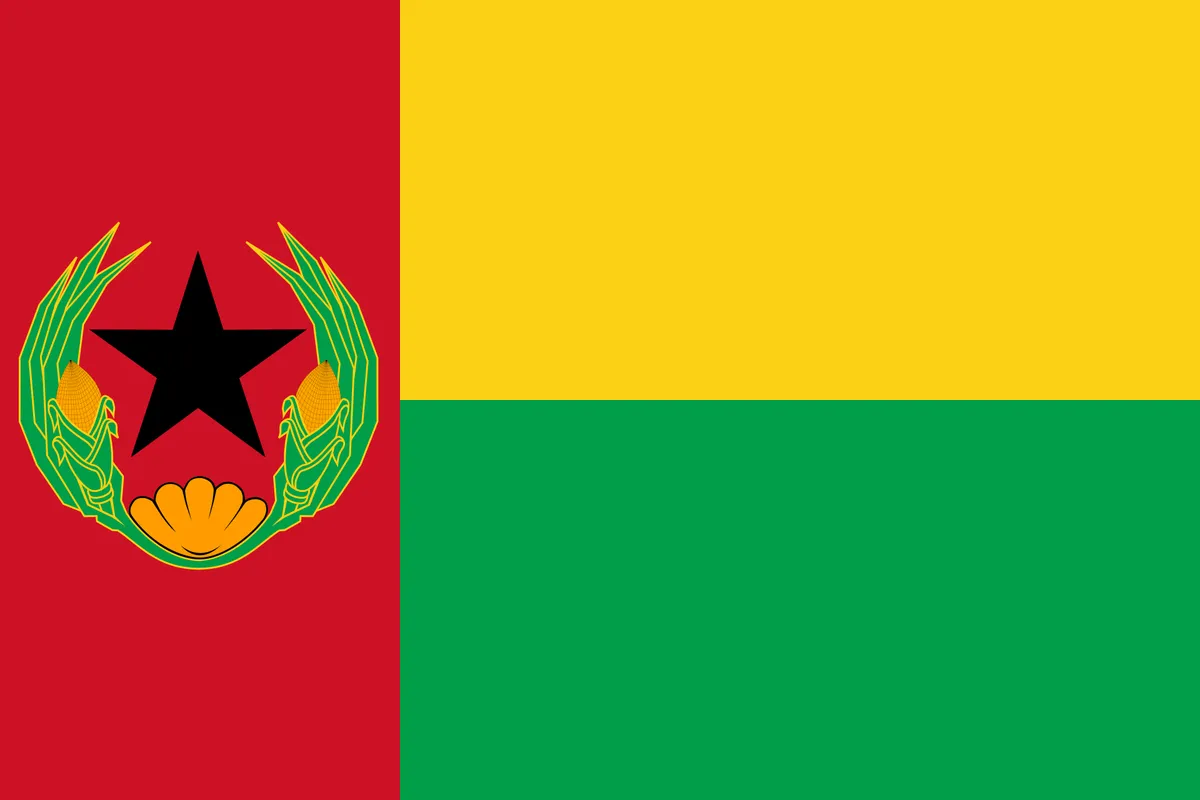
  3. 5 July 1975IndependenceCabo Verde declares its independence in Praia, and the new country's first flag is raised.
    A flag with a red vertical band bearing an emblem and a black star, and two bands, yellow and green.
    The flag of Cabo Verde from 1975 to 1992. Photo: Waldir (desenho).

    Cabo Verde declares its independence in Praia, and the new country's first flag is raised.

  4. November 1980Coup in Guinea-BissauA military coup removes Luís Cabral in Guinea-Bissau and shakes the plan for unity between the two countries.

    A military coup removes Luís Cabral in Guinea-Bissau and shakes the plan for unity between the two countries.

  5. 20 January 1981PAICV is bornThe Cape Verdean branch of the party breaks away and takes the name PAICV.

    The Cape Verdean branch of the party breaks away and takes the name PAICV.

Chapter 4 · 1990 – 1996

Democracy

Photo: VIEX - Ernest Niedermann, CC BY-SA 4.0

  1. 28 September 1990The end of the single partyThe single-party State is abolished, opening the way to several parties.

    The single-party State is abolished, opening the way to several parties.

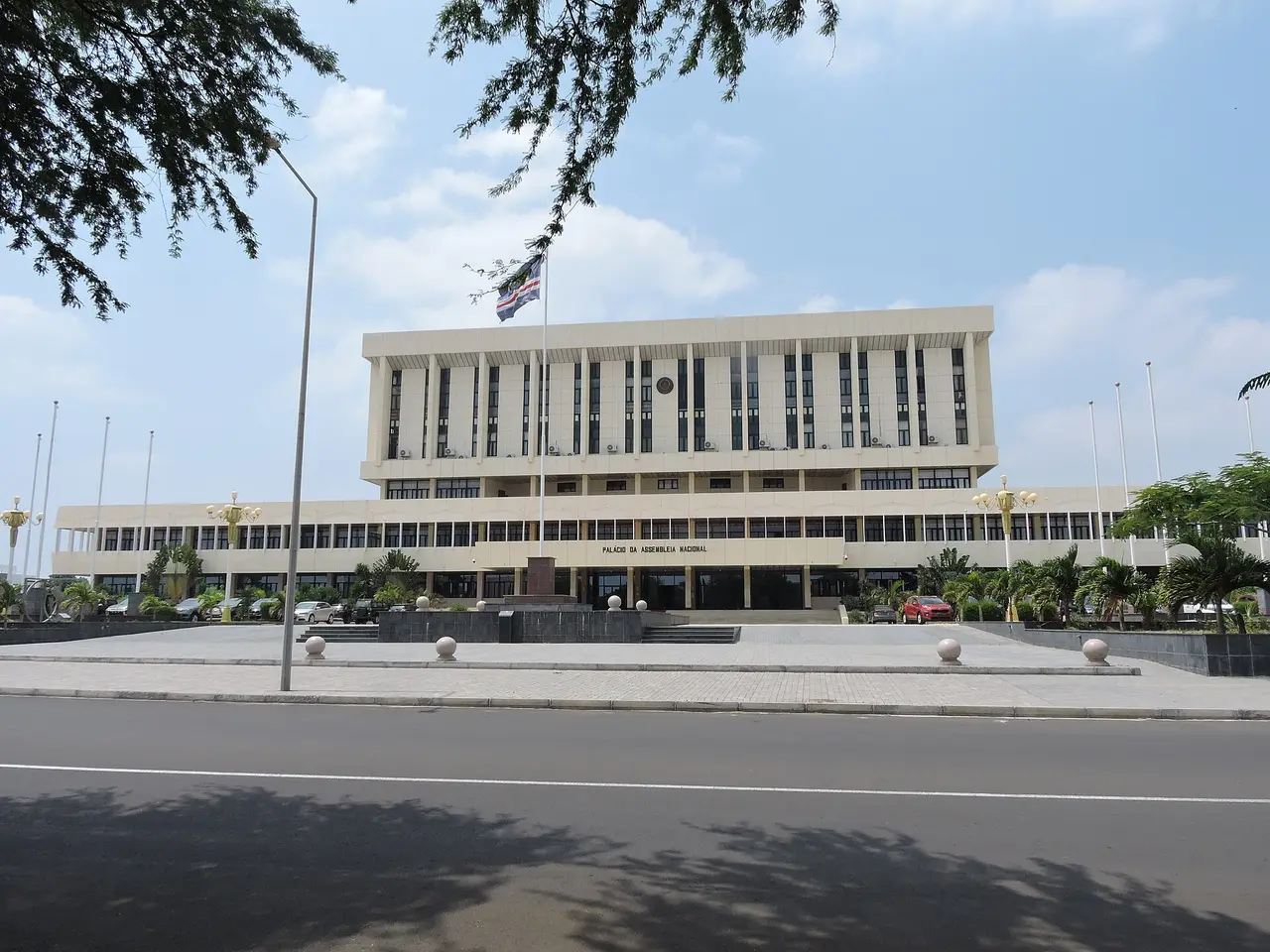
  2. 13 January 1991The first multi-party electionsIn the first multi-party parliamentary elections, MpD wins 56 seats and PAICV 23, out of a total of 79.
    A large, pale building, with the flag of Cabo Verde on a pole in front.
    The Palace of the National Assembly, in Praia, where the elected parliament meets. Photo: VIEX - Ernest Niedermann, CC BY-SA 4.0.

    In the first multi-party parliamentary elections, MpD wins 56 seats and PAICV 23, out of a total of 79.

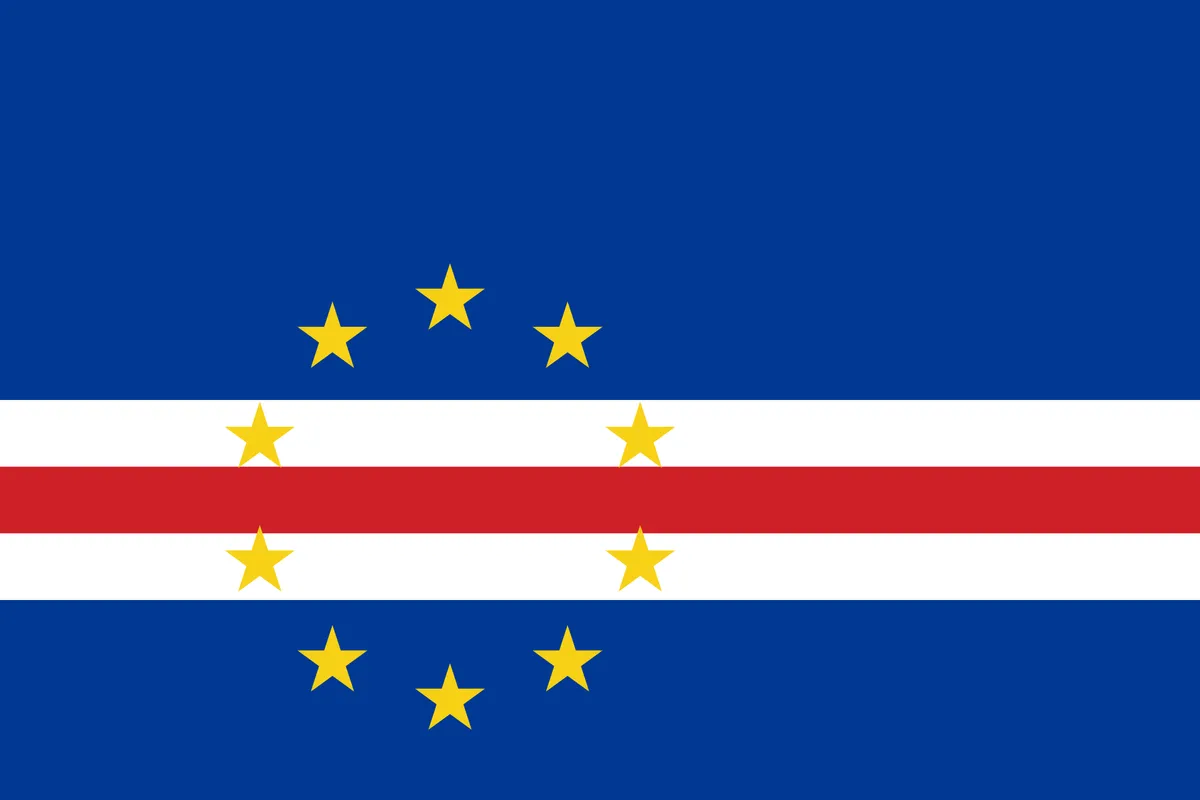
  3. 25 September 1992A new flagThe current flag is adopted.
    A blue flag with a white, red and white band, and a circle of ten yellow stars.
    The flag of Cabo Verde since 1992. Photo: Pedro Gregório (desenho original).

    The current flag is adopted. Its ten yellow stars stand for the ten islands.

  4. 26 May 1996A new anthemCântico da Liberdade is adopted.

    Cântico da Liberdade is adopted. Until then, Cabo Verde had the same anthem as Guinea-Bissau.

Chapter 5 · 2009 – 2019

Cabo Verde in the world

Photo: Cayambe, CC BY-SA 3.0

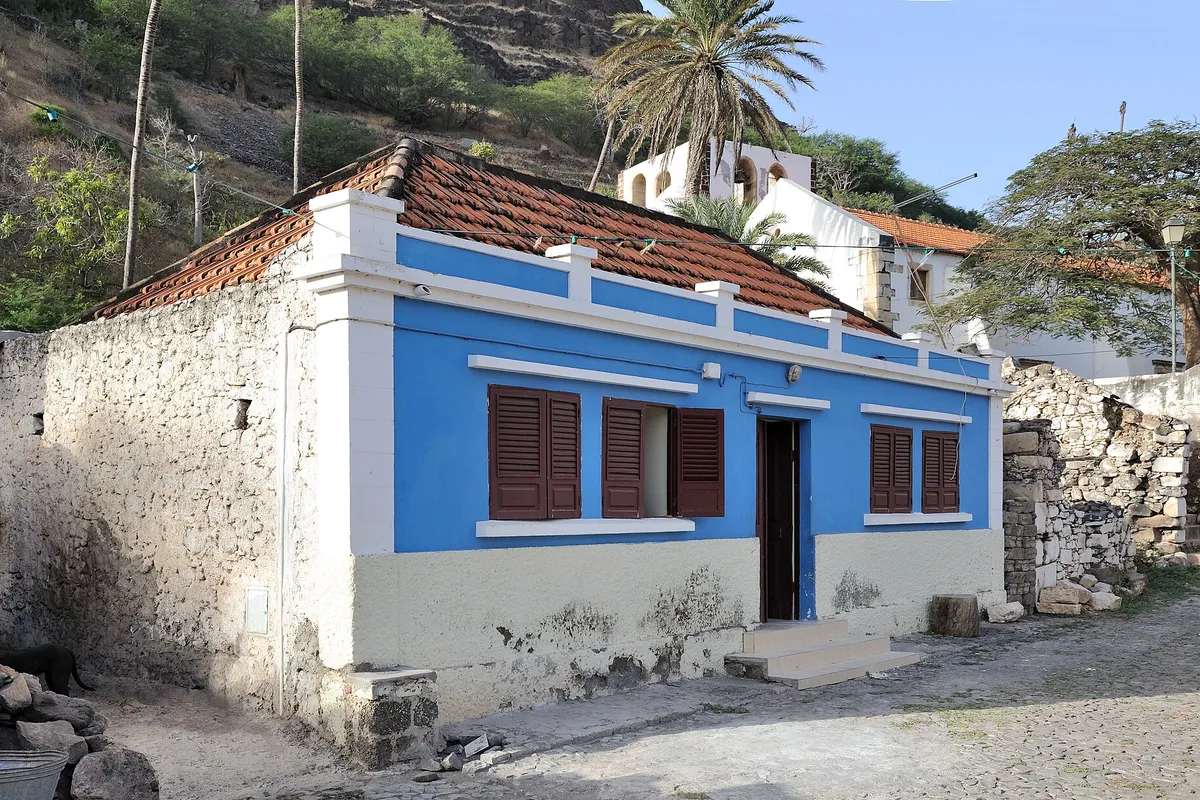
  1. 2009Cidade Velha, World HeritageUNESCO inscribes Cidade Velha, the historic centre of Ribeira Grande, on the World Heritage List.
    A low stone house with a thatched roof, on a street in Cidade Velha.
    A house on Rua Banana, in the historic centre of Cidade Velha. Photo: Cayambe, CC BY-SA 3.0.

    UNESCO inscribes Cidade Velha, the historic centre of Ribeira Grande, on the World Heritage List.

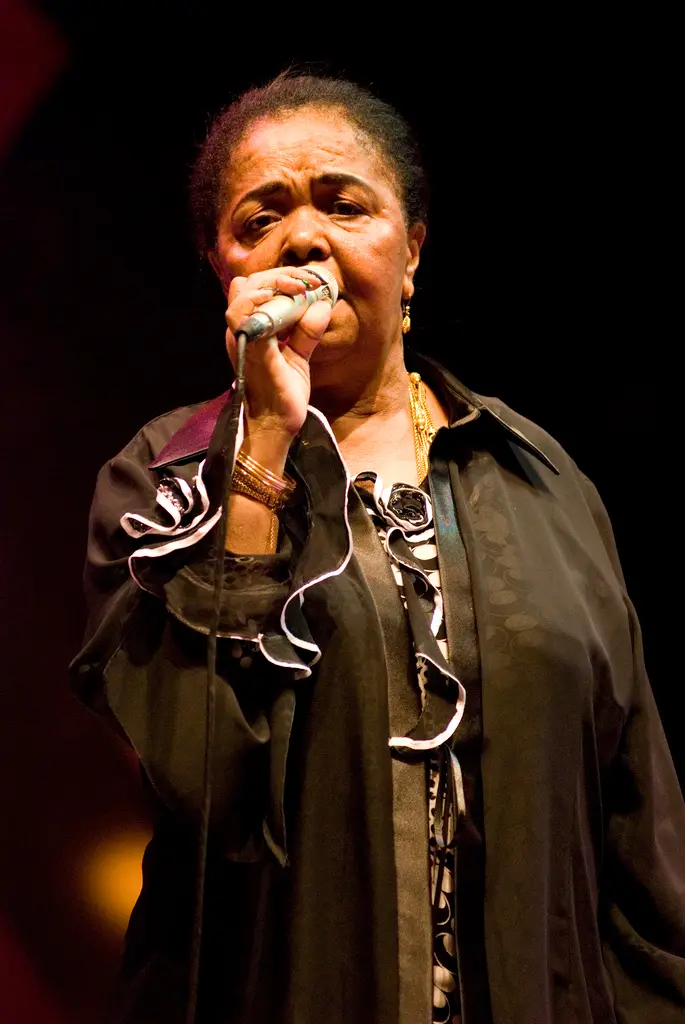
  2. 2019Morna, Heritage of HumanityUNESCO inscribes morna on the Representative List of the Intangible Cultural Heritage of Humanity.
    A short-haired singer, dressed in black, singing into a microphone.
    Cesária Évora in 2008. Photo: Silvio Tanaka, CC BY-SA 2.0.

    UNESCO inscribes morna on the Representative List of the Intangible Cultural Heritage of Humanity. It describes it as a musical and dance practice that brings together voice, music and poetry.

Test what you've learnt17 questions about history

References

  1. 1991 Cape Verdean parliamentary election (Wikipédia em inglês)
  2. African Party for the Independence of Cape Verde (Wikipédia em inglês)
  3. Amílcar Cabral (Wikipédia em inglês)
  4. Cabo Verde (Wikipédia em português)
  5. Cabo Verde antes do século XV? Vestígios abrem hipótese ainda por provar
  6. Cidade Velha (Wikipédia em inglês)
  7. Claridade (Wikipédia em inglês)
  8. Flag of Cape Verde (Wikipédia em inglês)
  9. Hino
  10. History of Cape Verde (Wikipédia em inglês)
  11. Investigador: Novos vestígios arqueológicos indiciam ocupação humana pré-colonial mais complexa em Cabo Verde
  12. Morna, musical practice of Cabo Verde
  13. O Hino: Cabo Verde em Cântico
  14. Portuguese Cape Verde (Wikipédia em inglês)
  15. Transnational Archipelago: Perspectives on Cape Verdean Migration and Diaspora. Jørgen Carling e Luís Batalha, «Cape Verdean Migration and Diaspora», pp. 14, 30 (nota 2); Jørgen Carling e Luís Batalha, «Cape Verdean Migration and Diaspora», pp. 17, 20; Jørgen Carling e Luís Batalha, «Cape Verdean Migration and Diaspora», p. 21; Jørgen Carling e Luís Batalha, «Cape Verdean Migration and Diaspora», p. 18; Jørgen Carling e Luís Batalha, «Cape Verdean Migration and Diaspora», p. 22