who decides and how

Democracy

How the people who govern are chosen, what each part of the State does, and who has governed Cabo Verde.

Presidential election of 15 November 2026

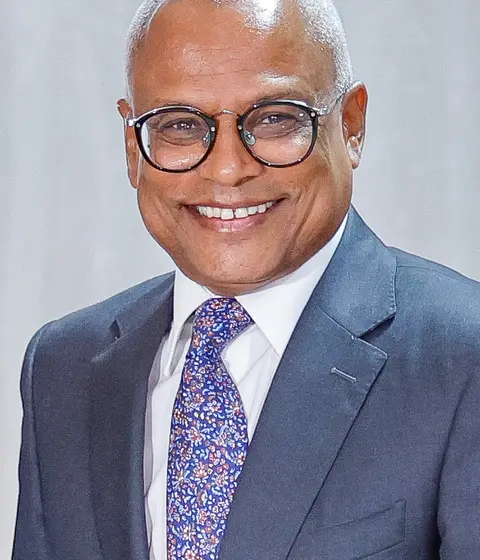
José Maria Neves re-elected in the first round

63.8%of the votes

José Maria Neves
80,554 votes
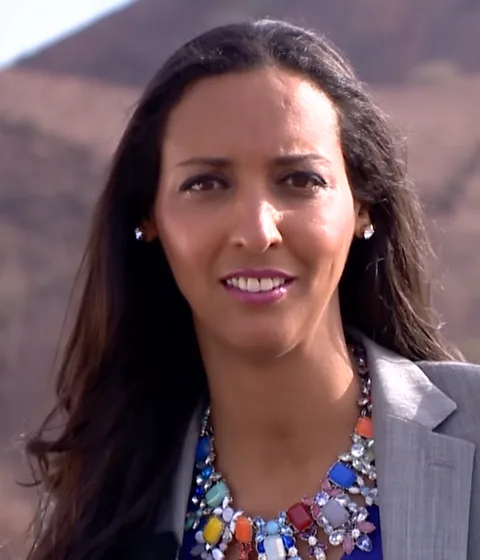
In second place: Joana Rosa
39,843 votes
Abstention
about 68%

Provisional result With 97.6% of polling stations counted. The official result from the National Elections Commission is still to come.

See the six candidates
Now in Cabo Verde

The counts are worked out on your device, with today's date.

Who holds office

  • President of the Republic

    José Maria Neves

    In office since 9 November 2021

    Term suspended since 14 September 2026, as he is standing for re-election.

  • President of the Republic, acting

    Janira Hopffer Almada

    In office since 14 September 2026

    President of the National Assembly. She stands in for the President while he is a candidate.

  • Prime Minister

    Francisco Carvalho

    In office since 19 June 2026

Next elections

  • Presidential elections

    Due in 2031

  • Parliamentary elections

    Due in 2031

  • Local elections

    Due in 2028

The six candidates of 2026

The Constitutional Court accepted six candidacies. They appear in alphabetical order and all without a photo, so that none stands out more. We only show votes when the news reports give them.

  • Antero Lúcio Tavares
  • Casimiro de Pina
  • Gilson Alves
  • Joana RosaBacked by MpD. Second most voted, according to the provisional results.39,843 votesprovisional
  • José Maria NevesPresident elected in 2021, backed by PAICV. Re-elected in the first round, according to the provisional results.63.8%80,554 votesprovisional
  • Loisito TavaresAdmitted after an appeal to the Constitutional Court.

How power works

There are three different elections, each with its own voters and its own people elected.

The whole country

Presidential elections

Every 5 years

Who votes

  • Cape Verdeans aged 18 or over, on the islands
  • Cape Verdeans registered abroad

The President may serve at most two consecutive terms.

The whole country

Parliamentary elections

Every 5 years

Who votes

  • Cape Verdeans aged 18 or over, on the islands
  • Cape Verdeans registered abroad, who elect 6 members

People vote for party lists for the Assembly. No one votes directly for the Prime Minister.

Each municipality

Local elections

Every 4 years, in the 22 municipalities

Who votes

  • Cape Verdeans aged 18 or over who live in the municipality
  • Citizens of Portuguese-speaking countries who live in Cabo Verde
  • Foreigners who have lived legally in Cabo Verde for more than 3 years

Each voter fills in two ballot papers. People living abroad do not vote in these elections. In 2024, PAICV won 15 councils and MpD 7.

Not elected

Independent: they obey only the Constitution and the law.

In short

  • In presidential elections, Cape Verdeans, on the islands and abroad, elect the President of the Republic.
  • In legislative elections, they elect the members of the National Assembly. Nobody votes directly for the Prime Minister: the President appoints them taking those results into account, and the Government answers to the Assembly.
  • In local elections, the people living in each municipality elect the Municipal Assembly and the Municipal Council. Some foreigners living in Cabo Verde also vote here, but emigrants do not.
  • The courts are not elected: they are independent and obey only the Constitution and the law.

How votes become seats

Each election has its own rules for counting votes. They come from the Constitution and the Electoral Code.

Presidential elections

  • The winner is whoever gets more than half the valid votes. Blank votes do not count as valid.
  • If no one does, there is a second round up to 15 days later, only between the top two.
  • Only people who are Cape Verdean by origin, with no other nationality, over 35, and who have lived in the country for the previous 3 years can stand.

What each vote is worth: The Electoral Code provides State support for campaigns of at least 750 escudos per vote, only for those who get at least 10% of the votes. But the Constitutional Court has been ordering payment also to those who got less and appealed.

Parliamentary elections

  • The country is divided into constituencies: one per island, and Santiago has two. Abroad there are 3 constituencies, each with 2 members.
  • Each constituency elects at least 2 members. The other seats are shared out according to the number of voters in each constituency.
  • People vote for a party list, not for a person. Seats go to the candidates in the order of the list.
  • In each constituency, the D'Hondt method shares out the seats among the lists.
  • The lists must have a balanced representation of women and men.

What each vote is worth: Each vote helps the list win seats. The Electoral Code also provides State support for campaigns of at least 750 escudos for each valid vote.

Local elections

  • In the Municipal Assembly, the D'Hondt method shares out the seats among the lists.
  • In the Municipal Council too, but if a list gets more than half the votes, it takes all the seats on the Council.

What each vote is worth: The Electoral Code provides State support for campaigns of at least 500 escudos for each valid vote.

The Assembly elected in 2026

The 72 members elected on 17 May 2026. Each dot is a seat.

2026 parliamentary elections
72members

34 women were elected. 6 members were elected by the diaspora. 46.5% of registered voters voted.

See the numbers
PartyMembersValid votesFrom the diaspora
PAICV3748.04%4
MpD3344.75%2
UCID25.2%0

The 22 councils

Who won each municipal council in the local elections of 1 December 2024. Each square is a municipality, grouped by its island.

PAICV: 15 councilsMpD: 7 councils

Santo Antão

  • Ribeira GrandeMpD
  • PaulMpD
  • Porto NovoPAICV

São Vicente

  • São VicenteMpD

São Nicolau

  • Ribeira BravaPAICV
  • Tarrafal de São NicolauMpD

Sal

  • SalMpD

Boa Vista

  • Boa VistaPAICV

Maio

  • MaioPAICV

Santiago

  • TarrafalPAICV
  • Santa CatarinaPAICV
  • São MiguelMpD
  • São Salvador do MundoMpD
  • Santa CruzPAICV
  • São Lourenço dos ÓrgãosPAICV
  • São DomingosPAICV
  • Ribeira Grande de SantiagoPAICV
  • PraiaPAICV

Fogo

  • MosteirosPAICV
  • Santa Catarina do FogoPAICV
  • São FilipePAICV

Brava

  • BravaPAICV

PAICV won Maio for the first time, and São Lourenço dos Órgãos by one vote.

Try the D'Hondt method

Type the votes of three made-up parties and how many seats there are to share. Each party's votes are divided by 1, 2, 3… and the seats go to the largest numbers.

It starts with a made-up example. It is not a real election.

Divisions of each party's votes
Party÷1÷2÷3÷4÷5
Party A1,000Seat 1500Seat 3333Seat 5250200
Party B700Seat 2350Seat 4233175140
Party C3001501007560

Result

  • Party A: 3 seats
  • Party B: 2 seats
  • Party C: 0 seats

If the last seat is tied between two parties, it goes to the one with fewer votes.

The parties

The eight parties registered with the Constitutional Court, in alphabetical order of their initials.

  • MpD symbol

    MpD Movimento para a Democracia (Movement for Democracy)

    Founded in 1990

    Founded on 14 March 1990, by Carlos Veiga. It won the first multi-party elections, in January 1991, and governed from 1991 to 2001 and from 2016 to 2026.

    Legislative elections of 2026
    33 members · 84,458 votes
    Local elections of 2024
    7 councils

  • PAICV symbol

    PAICV Partido Africano da Independência de Cabo Verde (African Party for the Independence of Cabo Verde)

    Founded in 1981

    It comes from PAIGC, the party of the independence struggle, founded in 1956. After the military coup of November 1980 in Guinea-Bissau, the Cape Verdean branch became PAICV, in January 1981. It was the only legal party until 1990, when multi-party democracy was approved.

    Legislative elections of 2026
    37 members · 90,660 votes
    Local elections of 2024
    15 councils

  • PCD symbol

    PCD Partido da Convergência Democrática (Party of Democratic Convergence)

    Founded in 1994

    It was born in 1994, from a split in MpD. In the 1995 parliamentary elections it won 6.7% of the votes and elected one member.

    Legislative elections of 2026
    Not in the results of the 2026 legislative elections.

  • PDR symbol

    PDR Partido da Renovação Democrática (Party of Democratic Renewal)

    Founded in 2000

    Founded in 2000 by Jacinto Santos, a former member of MpD and former mayor of Praia. In the 2001 parliamentary elections it won 3.4% of the votes, without electing any members. Other sources give its initials as PRD.

    Legislative elections of 2026
    Not in the results of the 2026 legislative elections.

  • PP symbol

    PP Partido Popular de Cabo Verde (People's Party of Cabo Verde)

    It is registered with the Constitutional Court and stood in the 2026 parliamentary elections.

    Legislative elections of 2026
    no members · 529 votes

  • PSD symbol

    PSD Partido Social Democrata (Social Democratic Party)

    Founded in 1992

    Founded in 1992 by João Além, from a split in UCID.

    Legislative elections of 2026
    Not in the results of the 2026 legislative elections.

  • PTS symbol

    PTS Pessoas Trabalho e Solidariedade (People, Work and Solidarity)

    Founded in 2000

    Registered with the Constitutional Court on 10 November 2000. It was founded by Onésimo Silveira, former mayor of São Vicente.

    Legislative elections of 2026
    no members · 3,268 votes

  • UCID symbol

    UCID União Caboverdiana Independente e Democrática (Independent and Democratic Cape Verdean Union)

    Founded in 1981

    Formally founded in Lisbon, in 1981, by a group of exiled Cape Verdeans. It did not stand in the first multi-party elections, in 1991, because it did not hand in its papers in time.

    Legislative elections of 2026
    2 members · 9,812 votes

The symbols are those registered with the Constitutional Court.

Women in politics

In a few years, women went from less than a quarter to almost half of Parliament.

Women: 34Men: 38
  1. 23.6%

    Before the law

    In 2018, women were 23.6% of the members of the National Assembly, 25% of the Government and 27% of municipal councillors.

  2. 40%

    The parity law

    In November 2019, the Parity Law changed the rules. Every list of candidates must have at least 40% of each sex. The first two places go to different sexes, and no more than two candidates of the same sex may ever appear in a row. A list that does not comply and is not corrected is rejected by the court.

  3. 34 of 72

    After the law

    In the 2021 parliamentary elections, 28 women were elected. In 2026 there were 34, almost half of the members. With these numbers, Cabo Verde joined the ten countries in the world with the most women in parliament, according to Inter-Parliamentary Union data quoted in the press.

Campaign money

Campaigning costs money. After the elections, the State helps pay those expenses, according to each candidacy's votes. It is not a salary or a prize: the money pays for the campaign, and the accounts are checked by the National Elections Commission.

What the law says

  1. For each valid vote, the State pays at least 750 escudos in presidential and legislative elections, and 500 escudos in local elections.
  2. The Electoral Code says that, in presidential elections, only those with at least 10% of the votes receive anything. But the Constitutional Court has ruled several times that this rule goes against the Constitution, and has ordered payment to candidates with less than 10% who appealed.
  3. As the rule is still written in the law, the National Elections Commission still applies it. Those below 10% have to appeal to the Constitutional Court.
  4. If the campaign accounts are not handed in, or are not correct, the payment is suspended.
  5. The law requires the amount to be updated for inflation. So the amount paid may be higher than the minimum.
  1. José Maria Neves80,554 votes × 750 escudos60,415,500 escudosabout 548 mil euros
  2. Joana Rosa39,843 votes × 750 escudos29,882,250 escudosabout 271 mil euros

The other four candidates together had less than 5% of the votes. Under the 10% rule, the Commission does not pay them. If they appeal, the Constitutional Court's rulings of recent years give them the right to the support per vote. The news reports do not yet give each one's votes, so we don't do the sum.

Calculated with the provisional results and the minimum amount set in law. The final amount depends on the official result and on the accounts approved by the Commission.

Do the sum

Type a number of votes and choose the election.

10,000 votes × 750 escudos

At least 7,500,000 escudos

about 68 mil euros

In presidential elections, the law asks for 10% of the votes. Below that, the Constitutional Court has ordered payment to those who appeal.

Euros at the fixed rate: 1 euro = 110.265 escudos.

The Constitution in 10 ideas

The Constitution is the country's most important law: every other law has to respect it. These are ten of its main ideas, with the article for anyone who wants to read it.

  1. Power belongs to the people

    The people exercise power through the vote and the referendum. No law is valid if it goes against the Constitution.

    articles 3 and 4
  2. Everyone is equal before the law

    No one may be favoured or disadvantaged because of race, sex, origin, language, religion, wealth or political ideas.

    article 24
  3. No death penalty and no life imprisonment

    Life is inviolable and no one may be tortured. No sentence may last for ever.

    articles 28 and 33
  4. Everyone can say what they think

    Everyone may express their ideas and inform themselves freely. Censorship is forbidden.

    article 48
  5. Leaving, returning and emigrating are rights

    Every citizen may leave the country, return and emigrate. Only a judge can limit this right, and only for a short time.

    article 51
  6. The vote is secret

    No one is obliged to say who they voted for, and each person votes only once.

    article 101
  7. Portuguese and the mother tongue

    Portuguese is the official language. The State promotes the conditions to make the Cape Verdean mother tongue official, on an equal footing with Portuguese.

    article 9
  8. The President can veto a law

    The President can send a law back to the Assembly, explaining why. If the Assembly confirms it by an absolute majority, the President must sign it into law.

    article 137
  9. The rules of the game don't change at the last minute

    The electoral law cannot be changed in the 10 months before the last Sunday on which the election can be held, nor between the vote and the counting of the results.

    article 98
  10. Some things can never change

    Changing the Constitution takes two thirds of the members. Independence, the Republic, the free and secret vote, the separation of powers, the independence of the courts and the right of opposition can never be taken away.

    articles 288 and 290

Who has governed since 1975

The government changed party through elections in 1991, 2001, 2016 and 2026.

Presidents of the Republic

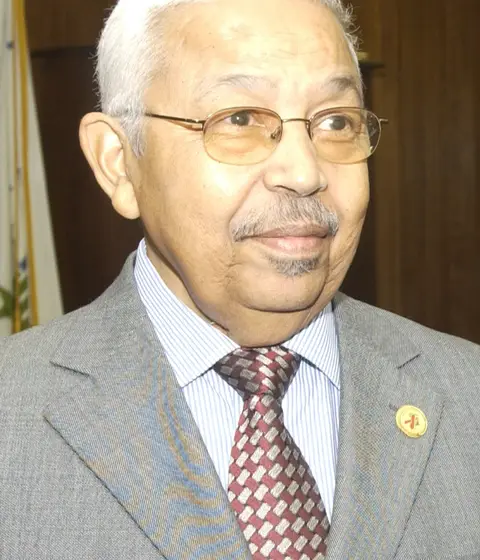
  1. Aristides Pereira1975–1991 · PAIGC, then PAICV
  2. António Mascarenhas Monteiro1991–2001 · MpD
  3. Pedro Pires2001–2011 · PAICV
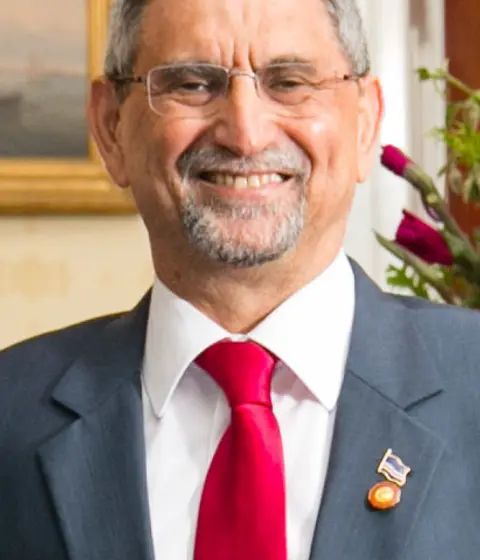
  4. Jorge Carlos Fonseca2011–2021 · MpD
  5. José Maria NevesElected in 2021 · PAICV

Prime Ministers

  1. Pedro Pires1975–1991 · PAIGC, then PAICV
  2. Carlos Veiga1991–2000 · MpD
  3. Gualberto do Rosário2000–2001 · MpD
  4. José Maria Neves2001–2016 · PAICV
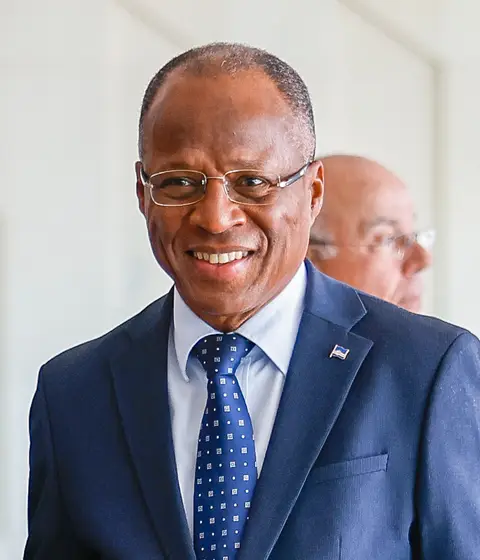
  5. Ulisses Correia e Silva2016–2026 · MpD
  6. Francisco CarvalhoSince 2026 · PAICV

The government changes party

Each bar is a term of office, with the party written on it. Where the two rows show different parties, the President and the Prime Minister came from different parties.

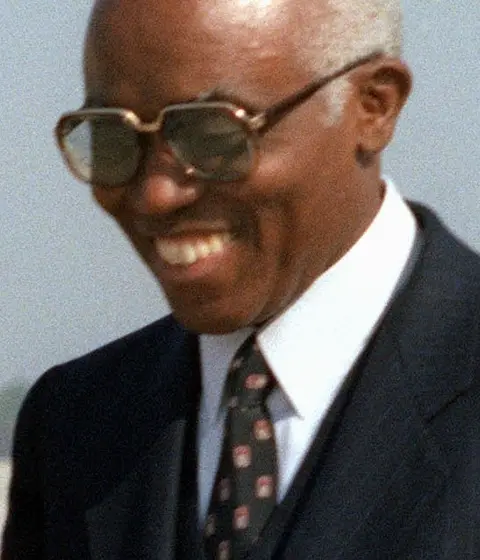
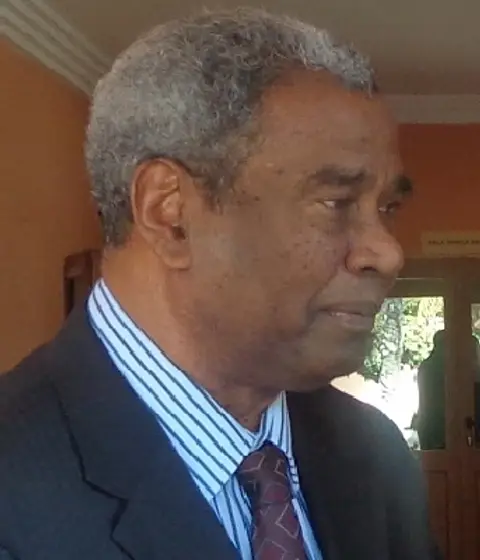
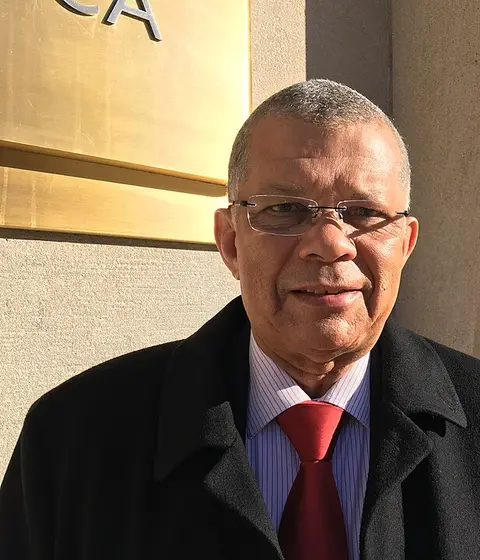
Portraits: Wikimedia Commons (public domain or CC BY), Inforpress, Africa24 and e-Global.

Test what you've learnt25 questions about democracy

References

  1. "Uma grande vitória". José Maria Neves reeleito Presidente de Cabo Verde
  2. 2026 Cape Verdean presidential election (Wikipédia em inglês)
  3. Acórdão n.º 94/2025, Gilson João dos Santos Alves contra a Comissão Nacional de Eleições
  4. African Party for the Independence of Cape Verde (Wikipédia em inglês)
  5. Apoio ao Eleitor
  6. Autárquicas 2024: Conheça os 22 presidentes de câmara eleitos
  7. Autárquicas 2024: Dados definitivos confirmam PAICV como partido vencedor das eleições de 01 de dezembro
  8. Cabo Verde entra no top 10 mundial dos países com mais mulheres no Parlamento
  9. Cabo Verde poupa 170 mil contos sem segunda volta
  10. Candidatos gastaram 1,6 milhão de euros na campanha às presidenciais cabo-verdianas
  11. CNE proclama resultados definitivos das legislativas de 2026 e confirma vitória do PAICV com 37 deputados
  12. CNE: Eleições presidenciais marcadas para 15 de Novembro
  13. Código Eleitoral, republicado com a Lei n.º 56/VII/2010. artigos 124.º, 374.º e 390.º; artigos 124.º, 406.º, 409.º, 410.º, 413.º, 414.º, 415.º e 416.º; artigos 124.º e 433.º; artigos 124.º, 132.º e 390.º
  14. Constituição da República de Cabo Verde (2.ª revisão ordinária, 2010). artigo 131.º; artigos 109.º, 125.º, 126.º e 194.º; artigos 109.º, 110.º, 113.º e 114.º; artigos 140.º, 141.º, 176.º e 186.º; artigos 185.º, 186.º, 187.º, 194.º e 196.º; artigos 141.º e 194.º; artigos 120.º e 234.º; artigos 231.º e 234.º; artigos 20.º e 111.º e capítulo da administração da justiça
  15. Democratic and Independent Cape Verdean Union (Wikipédia em inglês)
  16. Democratic Convergence Party (Cape Verde) (Wikipédia em inglês)
  17. Democratic Renewal Party (Cape Verde) (Wikipédia em inglês)
  18. Eleições autárquicas dão maioria ao PAICV em Cabo Verde
  19. Eleições Legislativas: perguntas frequentes
  20. José Maria Neves empossado como Presidente de Cabo Verde a 9 de novembro
  21. Labour and Solidarity Party (Wikipédia em inglês)
  22. Lei n.º 68/IX/2019, de 28 de novembro, Lei da Paridade. artigos 4.º a 6.º
  23. Lista de Partidos Políticos
  24. Movement for Democracy (Cape Verde) (Wikipédia em inglês)
  25. Novo Governo de Cabo Verde tomou posse esta sexta feira
  26. ONU Mulheres apoia projeto de lei da paridade em Cabo Verde
  27. Presidenciais 2026: José Maria Neves confirma candidatura a segundo mandato
  28. Presidenciais 2026: Tribunal Constitucional admite candidatura de Loisito Tavares e número de candidatos sobe para seis
  29. President of Cape Verde (Wikipédia em inglês)
  30. Prime Minister of Cape Verde (Wikipédia em inglês)
  31. Social Democratic Party (Cape Verde) (Wikipédia em inglês)
  32. Taxas de câmbio (Banco de Cabo Verde)
  33. The President appoints Francisco Carvalho to form a government
  34. Tipos de Eleição
  35. Tribunal Constitucional admite cinco candidaturas às eleições presidenciais de Cabo Verde