The 1940s
Why they left
Few countries have been shaped by migration as much as Cabo Verde. Devastating droughts and neglect by the colonial power caused terrible famines: in the 1940s, two famines in a row killed about a quarter of the population.
Leaving was often the only way out. Some people were taken with different degrees of coercion. Others went in search of work, and many helped their families from far away.
1904
The whalers of 1904
In 1904, the whaling ship Sunbeam sailed from New Bedford. At that time, most whaling crews were Cape Verdean, and in New England they were all called «Bravas», whichever island they had been born on. On board was Clifford Ashley, a 21-year-old photographer, who recorded the voyage in a diary, in photographs and in drawings. The photographs were only published as a book in 1982, by the New Bedford whaling museum.
When the book was written, the Ernestina was moored in the port of New Bedford. It was one of the ships that carried Cape Verdean emigrants to the city until well into the 20th century. This story is told by Memory Holloway.
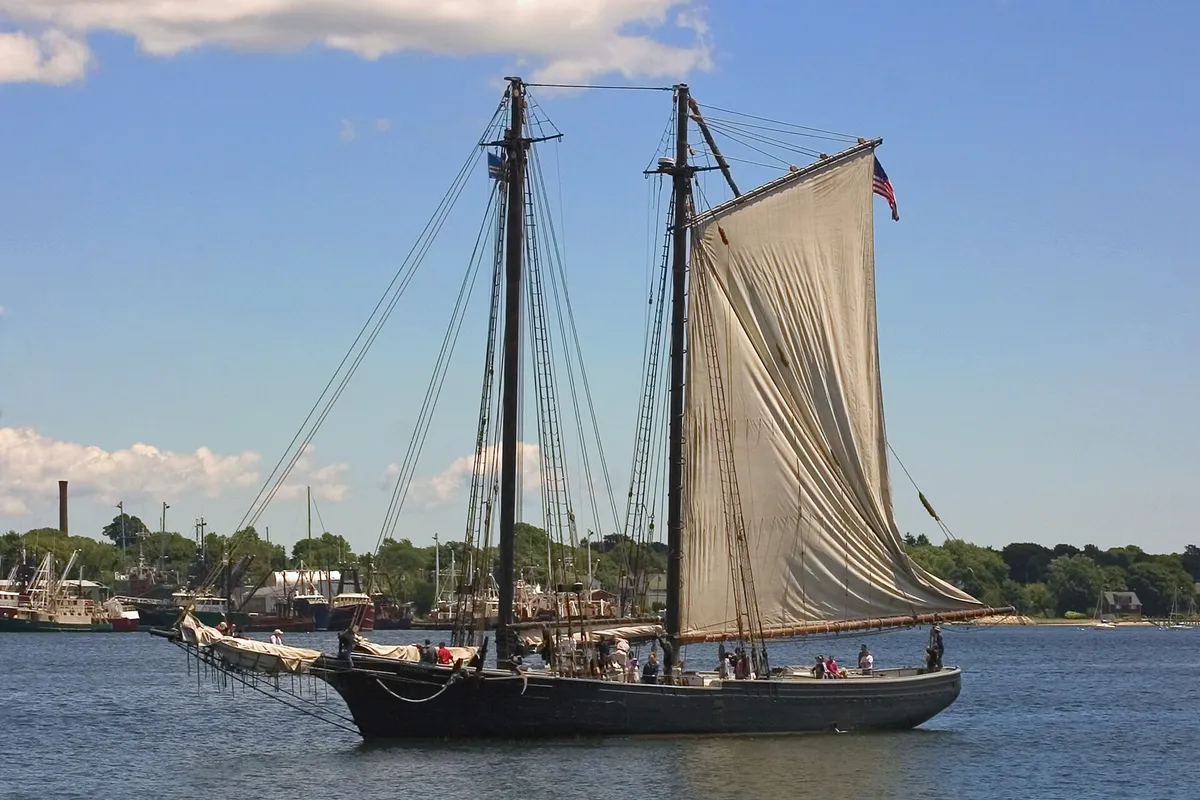
The schooner Ernestina sailing in the port of New Bedford, in 2010. Photo: National Park Service (NPS). No one knows for sure
How many are there?
No one knows for sure. Much of the migration happened in colonial times, many countries have no statistics, and there is always the question of who counts as Cape Verdean.
It is often said that the diaspora is twice the population of the islands, but there is little proof of that. There are probably more living abroad than on the islands. That is why, on this map, each number says who counted, and we do not rank them.
1 in 4
A country in many places
A quarter of the people in Cabo Verde have a parent, spouse or child abroad. Those who leave are still part of the country, and many keep their savings there: in 2025, emigrants' deposits in Cape Verdean banks came to about 60 billion escudos.
6 members
Voting from afar
Cape Verdeans registered abroad vote in presidential and parliamentary elections. In parliamentary elections, they elect 6 of the 72 members of the National Assembly, in 3 constituencies with 2 members each. They do not vote in local elections. In 2026, PAICV won 4 of the diaspora seats and MpD 2.
The grandmothers
When women leave
Many women left Boa Vista to work in family homes in Italy. Many left their young children with their grandmothers, and could only bring them over years later. Keeping the bond between mothers and children at a distance takes care on both sides, and the grandmothers are at the centre of that network. On the island, emigration is seen both as a solution and as a necessary evil.
Sodade
Sodade in the songs
Music is one of the main ways of linking Cape Verdean communities spread around the world. It helps people feel what it is to be Cape Verdean, to live in a new country and to return home. Many songs speak of departure and of sodade: a longing that can be felt for a place, a person or a time.
Ora di bai
To leave or to stay
Almost everyone in Cabo Verde thinks, one day, about leaving. On São Vicente, Lisa Åkesson often heard people say that emigration is «an illusion»: visas are very hard to get, and by phone and television people hear of the unemployment and racism many emigrants face. Even so, the wish to leave remains. It is not only about money: for many young people, leaving is the way to have a home of their own and an independent life, and emigration is seen as part of the country's history.
At parties, when everyone sings together songs about the ora di bai, the hour of departure, each family's sadness becomes a fate shared by all.
3rd and 4th generation
The new generations
In Europe, the children of emigrants were about to outnumber the first generation. In the United States there was a return to roots among the third and fourth generations. Keeping the bond depends more and more on choosing to know it.
from the sea to the world
The diaspora
Cabo Verde was also made beyond the islands, in every country Cape Verdeans reached.
More than a century of departures.
Tap a country to learn its story.

those who leave keep helping
The money that comes home
The money emigrants send home is called remittances. It helps families pay for food, health care and school.
31,367 million escudosreached Cabo Verde in 2025, about 284 million euros
about 12%of GDP in 2025, according to the World Bank
GDP is the value of everything the country produces in a year. The World Bank counts remittances slightly differently from the Bank of Cabo Verde, so this percentage is an order of magnitude.
Where it comes from
million escudos. It counts the foreign currency recorded by the banks. Parcels and cash brought by hand are not included. Provisional figures.
Year by year
- 26,1222021
- 29,9842022
- 28,6852023
- 30,4152024
- 31,3672025
million escudos
Where it goes
- Santiago53%
- São Vicente16%
- Fogo11%
- Santo Antão6%
- Sal4%
- São Nicolau3%
- Boa Vista2%
- Brava2%
- Maio2%
Santa Luzia has no inhabitants. Each island is the sum of its municipalities.