the money of the islands

The escudo

Cabo Verde's currency: today's notes, who they honour, the coins, and how money has changed since 1865.

Today's notes

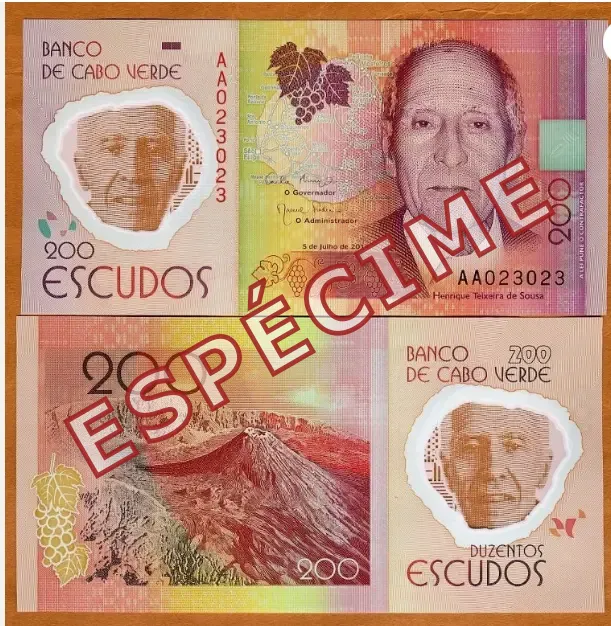
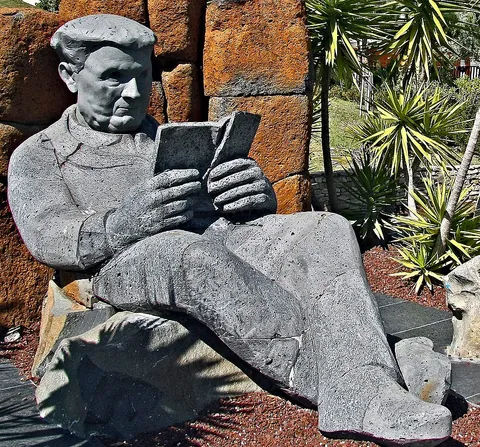
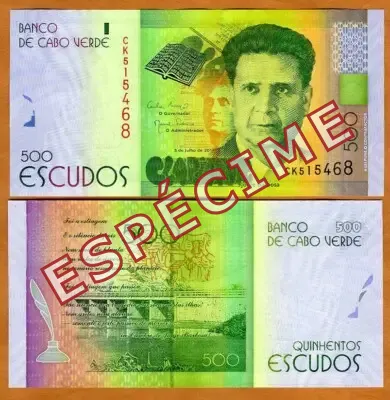
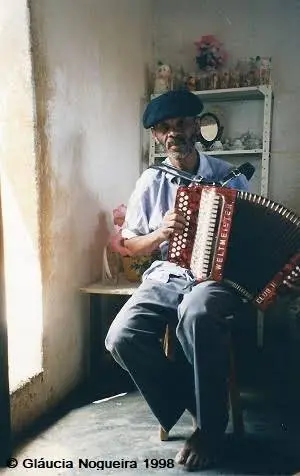
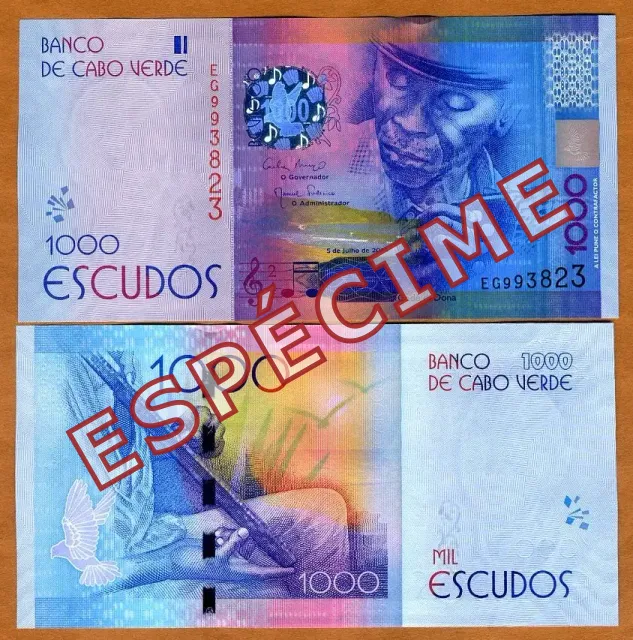
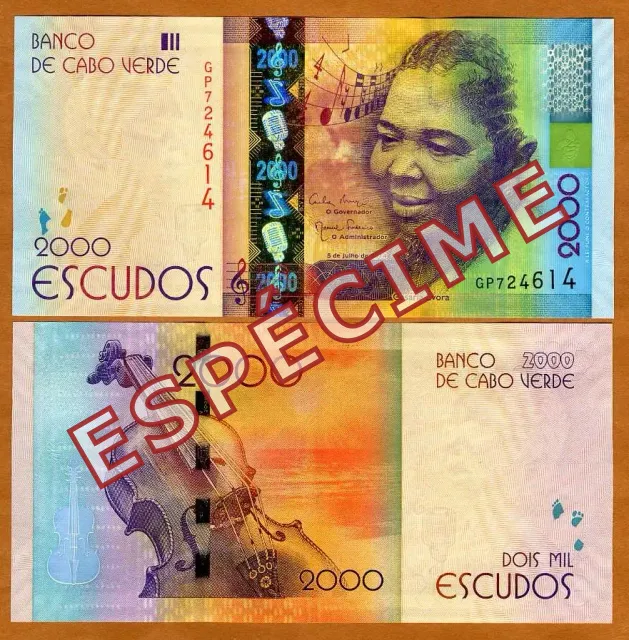
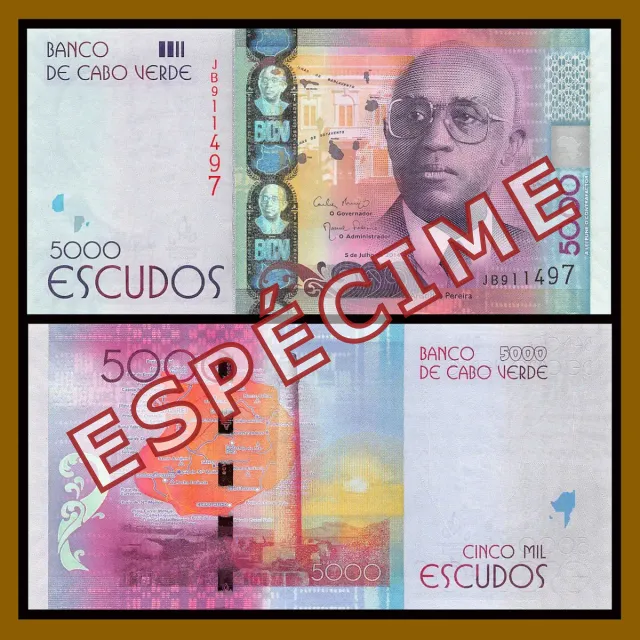
Each note in the 2014 series honours a person from Cabo Verde.

See the real notes and coins

The Bank of Cabo Verde shows them on its website.

what the country produces

The economy in numbers

GDP, or gross domestic product, is the value of everything the country produces in a year, in goods and services. It shows whether the economy is growing or shrinking.

299 billion escudoswas the GDP in 2025, about 3.1 billion dollars

about 5,800 dollarsper person in 2025

+6.3%was the economy's growth in 2025, leaving out the rise in prices

GDP from 2015 to 2025

  1. 1742015+0.9%
  2. 1842016+4.3%
  3. 1952017+4.6%
  4. 2062018+3.7%
  5. 2222019+6.9%
  6. 1762020−20.8%
  7. 1912021+7%
  8. 2362022+15.8%
  9. 2552023+4.8%
  10. 2772024+7%
  11. 2992025+6.3%

billion escudos. Below, each year's real growth.

2020, the year of the COVID-19 pandemic: the economy shrank by 20.8%.

What it is made of

  • Services (tourism, trade, transport, banks, the State)68%
  • Industry and construction11%
  • The rest (farming, fishing and taxes on products)21%

In 2019, before the pandemic, tourism brought in 56% of everything Cabo Verde sold abroad.

Emigrants' remittances are worth about 12% of GDP. See where the remittances come from

The State Budget for 2026

The Budget says how much the State plans to spend in the year and on what. It is approved by the National Assembly and signed into law by the President.

95.7 billion escudoswas the initial Budget

  1. General State services28%
  2. Social protection14%
  3. Education14%
  4. Health13%
  5. Economic affairs13%
  6. Other functions18%

After the 2026 elections, the new Government proposed an amended Budget of 103.9 billion escudos, approved in its general reading on 30 July.

Public debt is expected to be 97.4% of GDP: the State owes almost as much as the country produces in a year.

What Cabo Verde sells to and buys from the world, in 2025

It bought about 21 times more than it sold. Part of the difference is covered by money coming in from outside, such as tourism and remittances.

What it sells

  1. Prepared and preserved fish75.4%
  2. Postage stamps9%
  3. Clothing5.1%

Who it sells to

  1. Spain63%
  2. Italy12.1%
  3. Portugal11.2%
  4. United Kingdom9%

Who it buys from

  1. Portugal25.8%
  2. Spain11.5%
  3. Nigeria9.2%
  4. China6.2%
  5. Italy6%

GDP is in each year's prices. Real growth takes out the rise in prices, so the two do not grow at the same pace.

Work and prices

How many people are looking for work, where people work, what the minimum wage is and how fast prices rise.

  1. 4.9%

    Who is looking for work

    In the second half of 2025, the unemployment rate was 4.9%, the lowest ever, according to the INE. There were 215,317 people in work.

  2. 2 in 3

    Where people work

    About two thirds of people work in services, such as tourism, trade and the State. About 23% work in industry and construction, and about 9% in farming and fishing. These are International Labour Organization estimates for 2025.

  3. 17,000 escudos

    The minimum wage

    Since 1 January 2025, the minimum wage has been 17,000 escudos a month in the private sector and 19,000 in the civil service. In October 2026, the Government announced gradual rises from 2028, up to 30,000 escudos in 2031.

  4. 7.9% in 2022

    The price of things

    Inflation measures how much prices rise in a year. In 2022, prices rose 7.9%: what cost 100 escudos came to cost about 108. In the other years since 2015 the rise was much smaller, and in 2025 it was 2.3%.

Test what you've learnt6 questions about the economy

How it is written

The currency is the Cape Verdean escudo. One escudo has a hundred centavos. Prices are written with the cifrão sign where the decimal comma would be: 20$00 is twenty escudos, and 1.000$00 is a thousand. A thousand escudos is also called a conto.
The coins

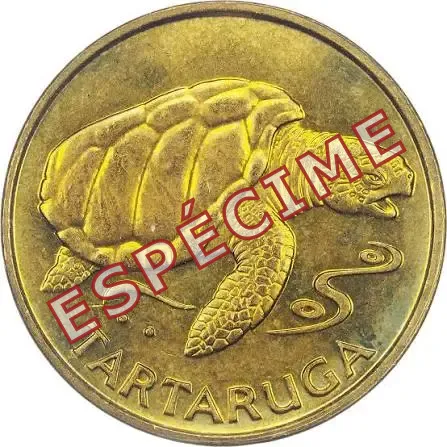
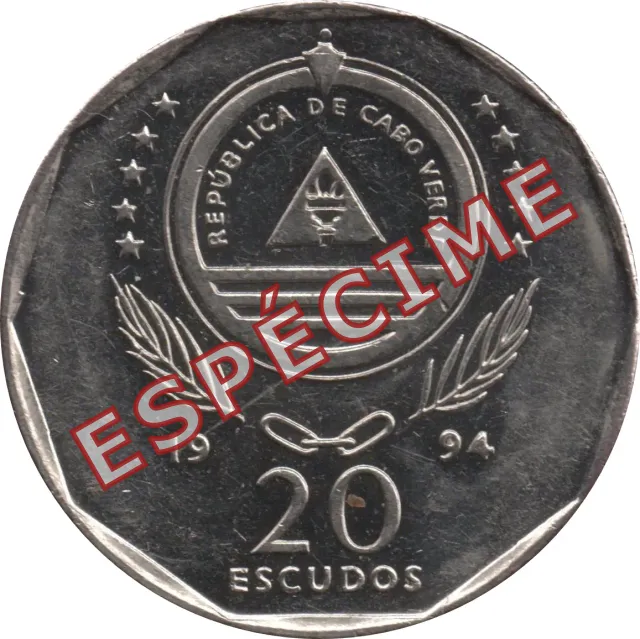
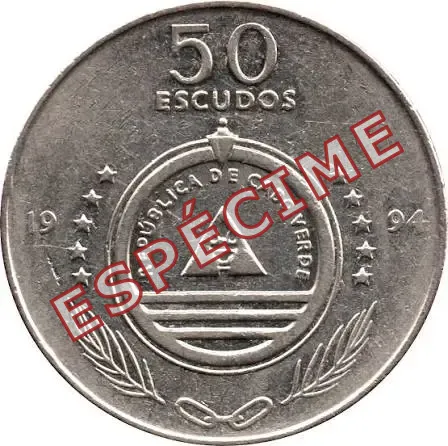
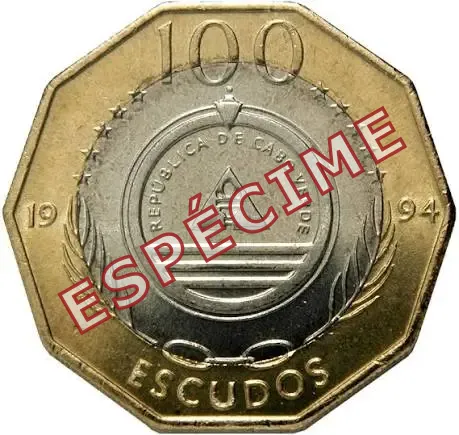
Today's coins date from 1994. The 1-escudo coin has a sea turtle. The 5, 10, 20, 50 and 100-escudo coins came out in three series: one with animals of the islands, one with historic ships, each with its name, and one with plants. The 100-escudo coin has ten sides and is made of two metals. There are also 200-escudo coins, made to mark anniversaries: in 1995, 20 years of independence and 50 years of the FAO; in 2005, 30 years of independence. The 1-escudo coin hardly circulates, and many sellers round prices to multiples of five.

From the real to the euro

How Cabo Verde's money has changed over the years.

  1. 1865

    The first notes of its own

    The Banco Nacional Ultramarino, a Portuguese bank, begins issuing notes just for Cabo Verde. The coins are still Portugal's.

  2. 1914

    The escudo is born

    The escudo becomes the currency of Cabo Verde, replacing the real: a thousand réis become one escudo.

  3. 1930

    Cabo Verde's first coins

    Coins of 5, 10, 20 and 50 centavos and 1 escudo come out. Until then Portuguese coins were used.

  4. 1975

    Independence

    Until independence, the Cape Verdean escudo was worth the same as the Portuguese escudo. Then it lost value: about 30% in 1977–78 and another 40% in 1982–84.

  5. 1 July 1977

    The money of the independent country

    The first notes of independent Cabo Verde come out, of 100, 500 and 1000 escudos, along with new coins.

  6. 1989

    A new series of notes

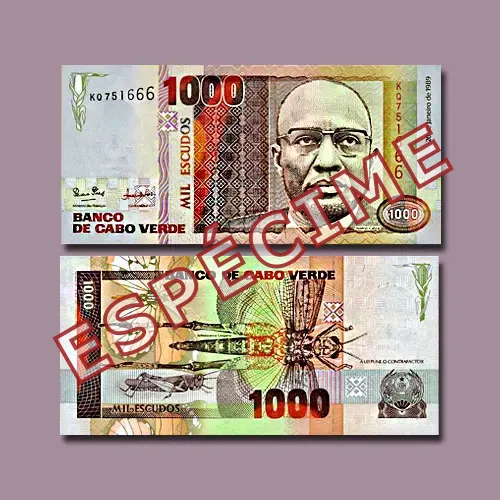
    Notes of 100, 200, 500, 1000 and 2500 escudos.

    The front and back of a 1000-escudo note: the portrait of a man with glasses and, on the back, a grasshopper.
    1000-escudo note from 1989. Photo: Desconhecido.
  7. 1992

    The third series

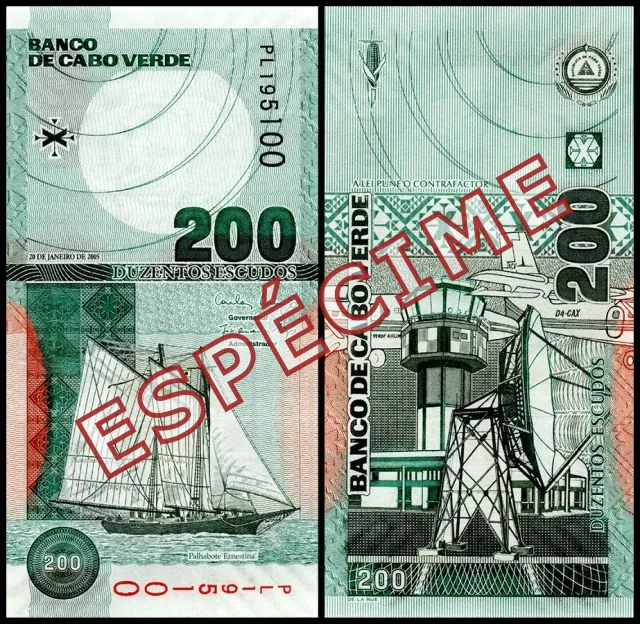
    Notes of 200, 500 and 1000 escudos. In 1999 the 2000 and 5000 notes join them. In 2005 the design of the 200 note changes, and in 2007 those of the 500 and 1000.

    The front and back of a green 200-escudo note: a sailing ship and an airport tower.
    200-escudo note from 2005, with the schooner Ernestina. Photo: Desconhecido.
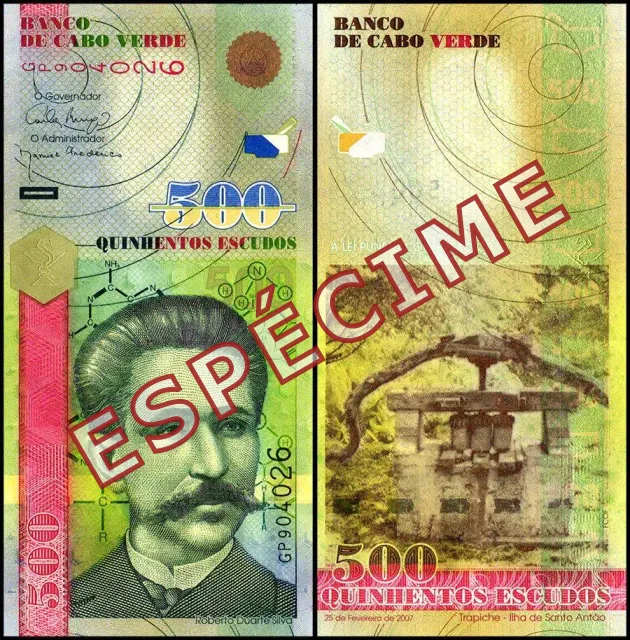
    The front and back of a 500-escudo note: the portrait of a man with a moustache and, on the back, a cane press.
    500-escudo note from 2007: Roberto Duarte Silva and, on the back, a cane press from Santo Antão. Photo: Desconhecido.
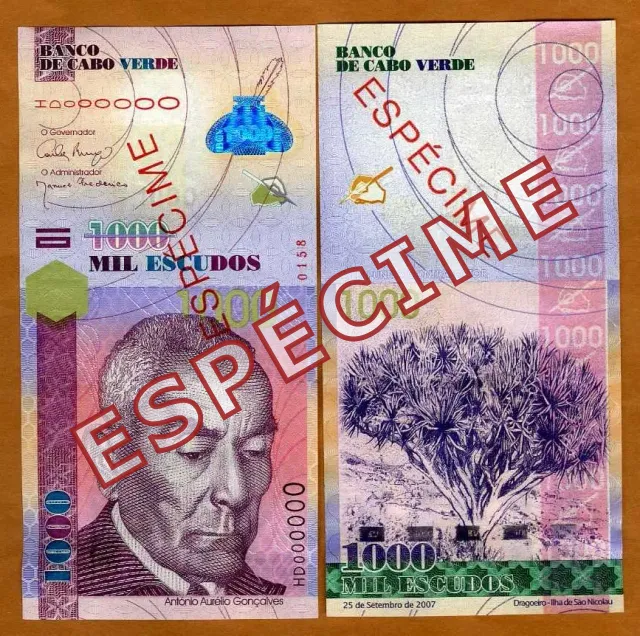
    The front and back of a 1000-escudo note with the word specimen: the portrait of an elderly man and, on the back, a dragon tree.
    1000-escudo note from 2007: António Aurélio Gonçalves and, on the back, a dragon tree from São Nicolau. Photo: Desconhecido.
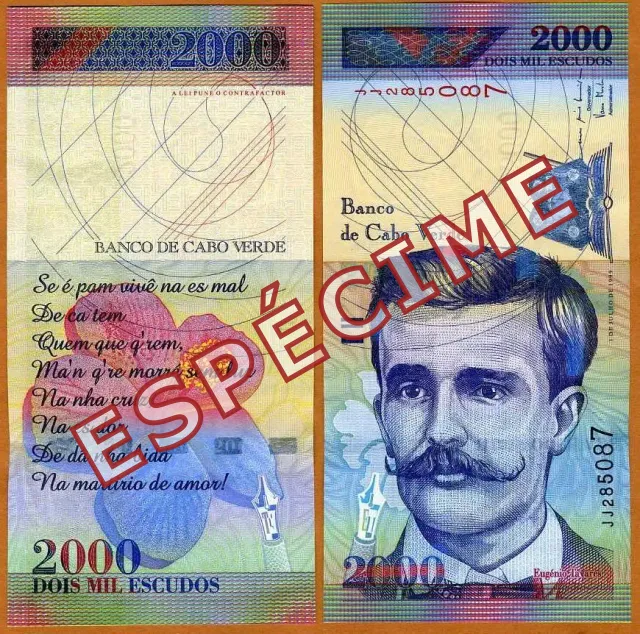
    The front and back of a blue 2000-escudo note: the portrait of a man with a moustache and a poem.
    2000-escudo note with Eugénio Tavares and one of his poems. Photo: Desconhecido.
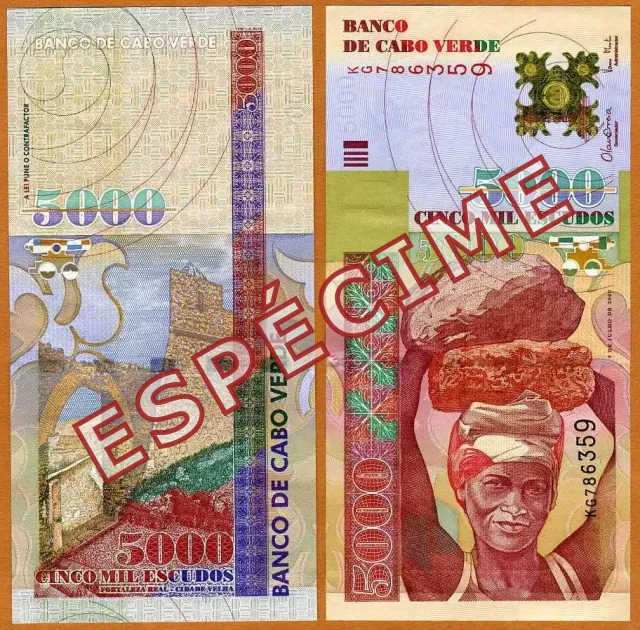
    The front and back of a 5000-escudo note: a woman carrying stones on her head and, on the back, a fortress.
    5000-escudo note from 2000, with the Fortaleza Real of Cidade Velha on the back. Photo: Desconhecido.
  8. 1994

    Today's coins

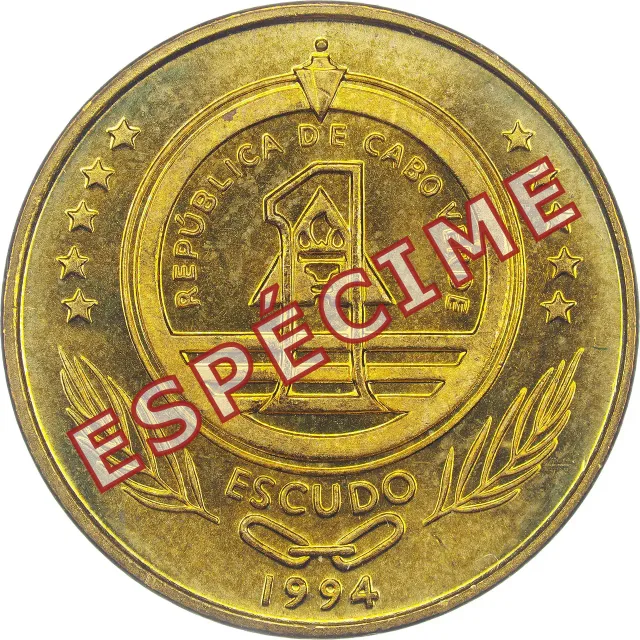
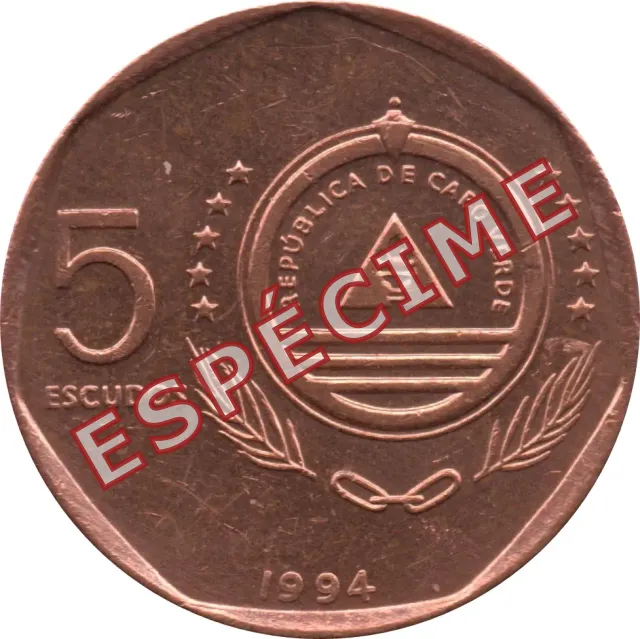
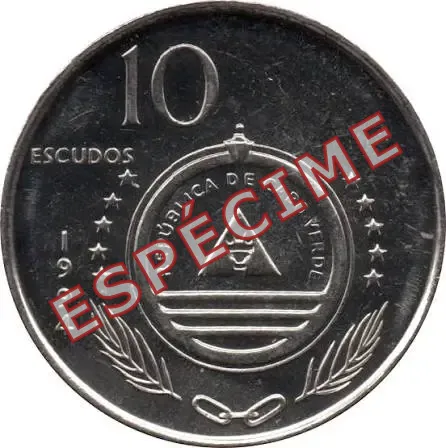
    The coins still in use come out, with the turtle on the escudo and series of animals, ships and plants.

    A gold-coloured coin with a turtle and the word tartaruga, turtle.
    1-escudo coin: the turtle. Photo: Desconhecido.
    A gold-coloured coin with the number 1 and the emblem of the Republic of Cabo Verde.
    1-escudo coin, 1994. Photo: Desconhecido.
    A copper-coloured coin with the number 5 and the emblem of the Republic of Cabo Verde.
    5-escudo coin, 1994. Photo: Desconhecido.
    A silver-coloured coin with the number 10 and the emblem of the Republic of Cabo Verde.
    10-escudo coin, 1994. Photo: Desconhecido.
    A silver-coloured coin with the number 20 and the emblem of the Republic of Cabo Verde.
    20-escudo coin, 1994. Photo: Desconhecido.
    A silver-coloured coin with the number 50 and the emblem of the Republic of Cabo Verde.
    50-escudo coin, 1994. Photo: Desconhecido.
    A ten-sided coin, gold and silver, with the number 100 and the emblem of the Republic of Cabo Verde.
    100-escudo coin, 1994. Photo: Desconhecido.
  9. 1998

    A fixed rate

    An agreement with Portugal ties the Cape Verdean escudo to the Portuguese escudo, at a fixed rate and backed by a Portuguese credit line.

  10. 1999

    Tied to the euro

    When the euro replaces the Portuguese escudo, the Cape Verdean escudo becomes tied to the euro: 1 euro is worth 110.265 escudos.

  11. 2014

    Notes with faces of Cabo Verde

    The Bank of Cabo Verde launches a new family of notes honouring figures from literature, music and politics. The first, of 200, 1000 and 2000 escudos, have circulated since 23 December 2014.

  12. 10 September 2015

    The full family

    The 500 and 5000-escudo notes arrive.

  13. 2025

    New 1000 and 2000 notes

    The Government approves new 1000 and 2000-escudo notes, on stronger cotton paper and with more security features, highlighting funaná and morna. The old notes remain valid.

Test what you've learnt5 questions about the escudo

References

  1. Cabo Verde atinge taxa de desemprego histórica no segundo semestre de 2025
  2. Cabo Verde prevê aumento gradual do salário mínimo para 30 mil escudos até 2031
  3. Cabo Verde tem novo salário mínimo
  4. Cabo Verde will have 1,000 and 2,000 escudo notes that are safer and with innovative details (Inforpress, 15 de abril de 2025)
  5. Cabo Verde. Promulgado Orçamento do Estado para 2026
  6. Cape Verde new 200-, 1,000-, and 2,000-escudo notes confirmed (Banknote News)
  7. Cape Verde new 500- and 5,000-escudo notes confirmed (Banknote News)
  8. Cape Verdean escudo (Wikipédia em inglês)
  9. Codé di Dona (Wikipédia em inglês)
  10. Decreto-Lei n.º 2/2025, de 3 de fevereiro: novas notas de 1000 e 2000 escudos (Boletim Oficial, I Série, n.º 6)
  11. Employment by sector and inflation, consumer prices: Cabo Verde
  12. Exportações de Cabo Verde ascendem para 85,1 milhões de euros em 2025
  13. Exports reach 9.386 billion escudos in 2025, up 18.2% – INE
  14. Henrique Teixeira de Sousa (Wikipédia em inglês)
  15. Parlamento cabo-verdiano aprova na generalidade Orçamento Retificativo de 2026
  16. Personal remittances, received (% of GDP): Cabo Verde
  17. World Development Indicators, Cabo Verde